Structural Drying and Dehumidification in Gilbert
A hot arid climate does not dry out wet drywall, insulation or subfloor sealed inside a wall. The crew sets air movers and dehumidifiers and uses daily meter readings to show when the structure is truly dry.
(888) 949-8496Call about drying now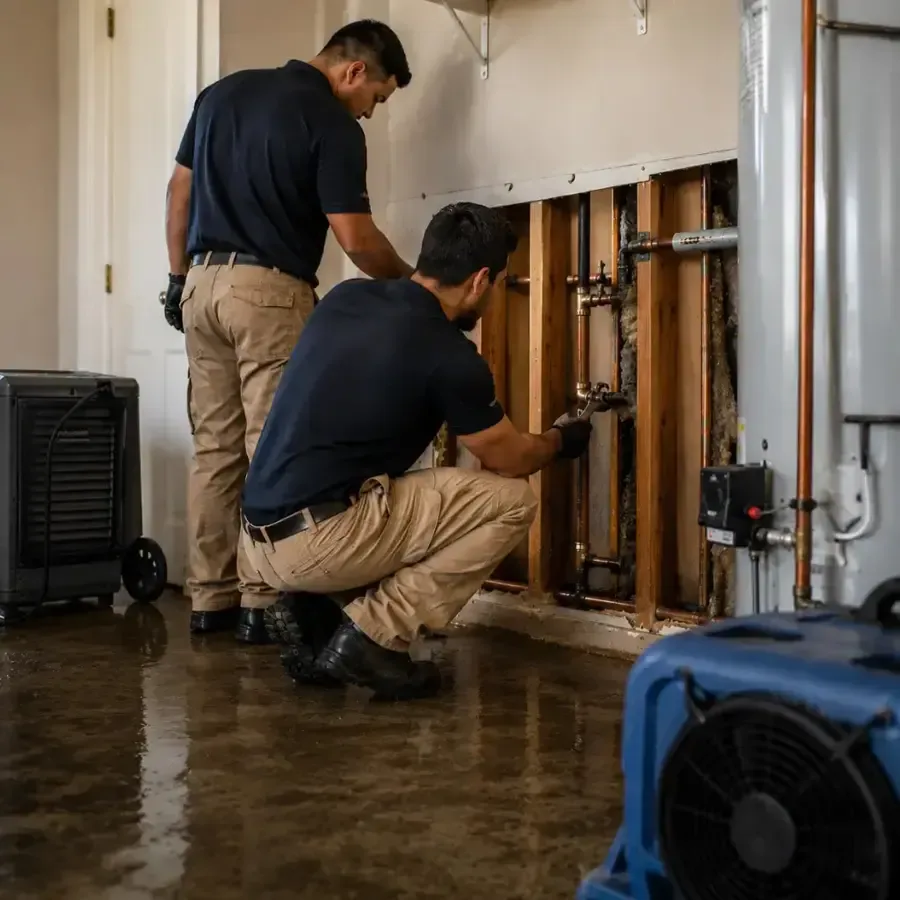
What to do right now about structural drying and dehumidification
Surface looks dry but the wall feels cool or damp? The readings will tell what is really wet.
(888) 949-8496Check the wall- Remove the standing water. Extraction comes first, because drying equipment cannot manage pooled water.
- Open the affected areas. Baseboards or wall sections are opened where readings show hidden moisture.
- Set the equipment. Air movers and dehumidifiers are placed to match the wet area.
- Track the numbers. Readings are taken each day and logged until they return to normal.
What does structural drying and dehumidification cost in Gilbert, AZ?
Drying alone runs from about $1,500 for one room to $14,000 or more for concrete or hardwood, because denser materials need more equipment time, more monitoring and specialty drying tools on site.
One room
- Air movers set
- Daily readings
- Short drying run
Several rooms
- Larger equipment set
- Wall cuts as needed
- Detailed logs
Concrete or hardwood
- Extended drying
- Specialty equipment
- Final dry readings
Ranges are typical, not a quote. The category of water, the square footage, the material class and how fast drying started move the total most. Try the water damage cost calculator for a closer range.
How structural drying and dehumidification is handled in Gilbert
Measure
Baseline readings map the wet materials.
Place
Equipment is set for the wet area.
Monitor
Daily readings show progress.
Confirm
Final readings show dry standard.
Understanding structural drying and dehumidification
Gilbert has a hot arid climate, and that helps surface drying. It does not reach the wet drywall, insulation and subfloor hidden inside walls, where water can sit unseen. Those materials still need moisture readings and controlled drying so the moisture does not linger or cause damage later.
What controlled drying does
- Air movers push dry air across wet surfaces to lift moisture
- Dehumidifiers pull that moisture out of the air so it does not settle again
- Wall cavities are opened or vented where readings stay high
- Equipment is moved or removed as the readings improve
The goal is to reach the dry standard, not to guess, and equipment that is pulled too early can leave a wall wet inside.
Meter readings decide
Each material has a normal moisture level, and the crew records readings from the same spots every day. Drying stops when those numbers return to normal, and not before. A wall that feels dry to the hand can still read high on the meter, which is why the numbers matter more than the feel.
Concrete and hardwood
Dense materials hold water longer and need more time. Hardwood can cup and concrete can stay damp deep below the surface, so the schedule for those jobs runs longer than for carpet and drywall, and the equipment stays in place until the deepest reading settles.
Records for the adjuster
The daily readings and equipment log show the drying was done properly. The water extraction page covers what happens just before drying begins.
Public references
For background beyond this page, see CDC, Floods and your health and Arizona Department of Insurance and Financial Institutions.
Structural drying and dehumidification across Gilbert and nearby communities
Drying jobs are handled across the town in ZIP codes 85233, 85234 and 85296, from areas along Gilbert Road and Chandler Boulevard to the neighborhoods around the Heritage District and Val Vista Lakes.
The same service nearby: structural drying and dehumidification in Florence, Queen Creek, Apache Junction.
Structural Drying and Dehumidification questions, answered
Still dealing with it?
Surface looks dry but the wall feels cool or damp? The readings will tell what is really wet.
(888) 949-8496 Check the wallWill a hot dry climate dry the house on its own?
Surface moisture may fade, but water inside walls and under flooring stays damp, so controlled drying with meter readings is still needed.
How is dryness confirmed?
The crew compares daily readings against the normal level for each material and removes the equipment only when the numbers match.
Why do dehumidifiers run along with air movers?
Air movers lift moisture off surfaces, and dehumidifiers remove it from the air. Together they keep the moisture from settling back in.
Why does concrete take longer to dry?
Concrete is dense and holds water deep below the surface, so readings can look dry on top before the slab is. See slab leak damage for a related case.
Does drying start before the walls are opened?
Readings come first. If the meter shows moisture in a cavity, a section of wall or baseboard is opened or vented so air can reach the wet materials. See burst pipe damage for an example.
Make sure the structure is truly dry
The crew can read moisture in the walls and floors, set drying equipment to match and keep a daily log until the numbers are normal.
(888) 949-8496Book moisture readings