Structural Drying and Dehumidification in Florence, AZ
Surfaces in a desert home can feel dry within a day while the framing, the drywall and the slab underneath stay wet. The drying team sizes air movers and LGR dehumidifiers to the class of loss and keeps them running until readings say dry.
(888) 949-8496Get readings on the framing and slab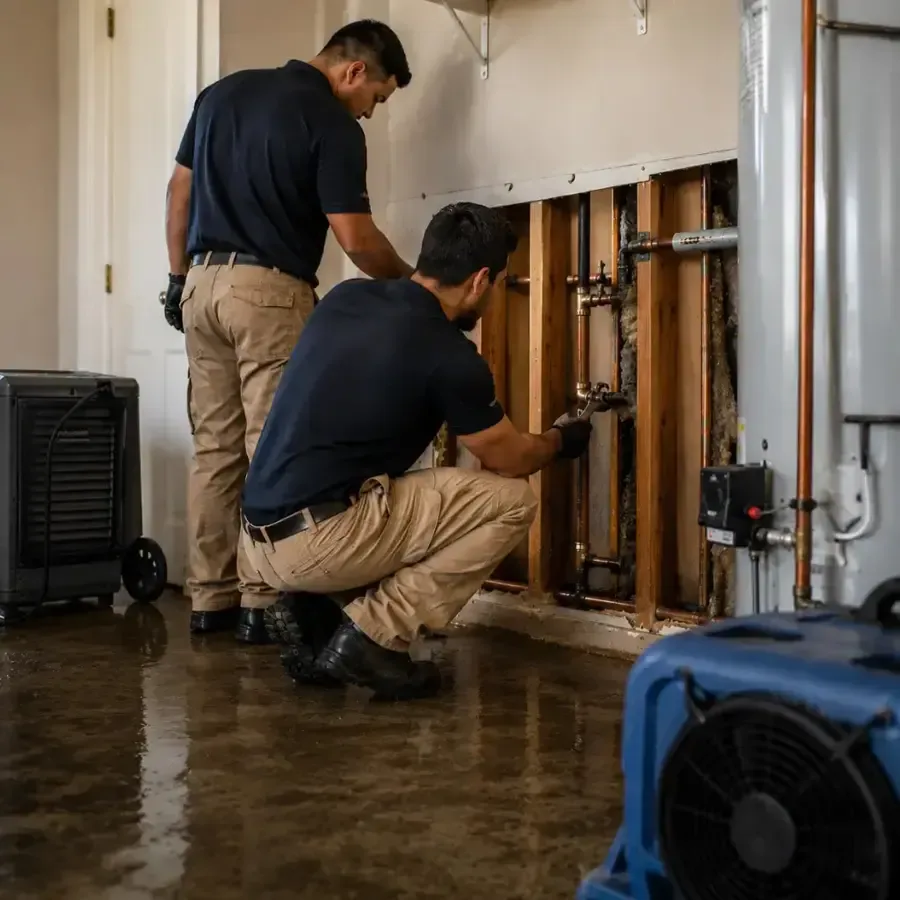
What to do right now about structural drying and dehumidification
Floor feels dry but the walls still read wet? A drying tech can check the readings at any hour.
(888) 949-8496Get moisture readings on the walls- Leave the equipment running. Do not switch off air movers or dehumidifiers between visits.
- Keep the room closed. Close windows and doors so the drying chamber holds.
- Check the reservoir. Some units need a bucket emptied; most pump to a drain.
- Note any new spots. Point out new stains or damp areas at the next visit.
What does structural drying and dehumidification cost in Florence, AZ?
Structural drying typically costs $1,500 to $14,000. The class of loss, the square footage, whether concrete or hardwood needs drying and how many days the equipment runs set the number; extraction is often on the same scope.
One room
- Air movers and a dehumidifier
- Daily readings
- Three to four days
Several rooms
- Containment and LGR units
- Wall cavities vented
- Moisture maps
Concrete or hardwood
- Desiccant drying
- Class 4 materials
- Longer monitoring
Ranges are typical, not a quote. The category of water, the square footage, the material class and how fast drying started move the total most. Try the water damage cost calculator for a closer range.
How structural drying and dehumidification is handled in Florence
Read
A dry reference and wet readings are taken.
Set
Equipment is sized to the class of loss.
Monitor
Readings are logged every day.
Release
Equipment comes out when readings match.
Understanding structural drying and dehumidification
Structural drying is the part of a water job that decides whether the damage stays small. After extraction, the water left in a home sits inside materials: the bottom of the drywall, the studs and plates, the cabinet bases and the concrete slab. Air movers pull that moisture to the surface, and dehumidifiers take it out of the air so it cannot settle back in.
Why desert air is not enough
Outdoor air here is often hot and dry, which tempts people to open the windows and wait. Inside the wall and under the tile, that does little, and during the monsoon the outdoor air turns humid. A closed drying chamber with LGR dehumidifiers controls the humidity, so materials keep giving up water day and night.
How drying is measured
- A dry reference is read from an unaffected wall or floor in the same home
- Wet materials are read daily with pin and pinless meters
- Psychrometric readings track temperature, humidity and grains per pound
- Equipment comes out when materials sit within 2 to 4 points of the reference
Class of loss sets the equipment
The class of loss describes how much water the materials absorbed, from Class 1 with little wet area to Class 4 for dense materials like hardwood, plaster and concrete. Higher classes need more air movers, more dehumidification and, for concrete, sometimes desiccant units. Slab work is covered in detail under slab leak water damage.
Records that close the claim
Daily logs and moisture maps show the adjuster that the structure reached dry before rebuild. Those records also protect the home: drywall hung over wet studs is how a small loss turns into a second one.
Public references
For background beyond this page, see CDC, Floods and your health and Arizona Department of Insurance and Financial Institutions.
Structural drying and dehumidification across ZIP 85132 and Pinal County
The response team covers ZIP 85132, from Anthem at Merrill Ranch and Magic Ranch off Hunt Highway to Magma Ranch, Crestfield Manor and the older streets around Historic Main Street and State Route 79.
Nearby coverage reaches Coolidge, Queen Creek, San Tan Valley, Casa Grande, Apache Junction, Gilbert.
Related water damage services
Structural Drying and Dehumidification questions, answered
Still dealing with it?
Floor feels dry but the walls still read wet? A drying tech can check the readings at any hour.
(888) 949-8496 Get moisture readings on the wallsHow long does structural drying take?
Most homes dry in three to five days. Concrete, hardwood, plaster and long-running leaks take longer, and the readings, not the calendar, decide.
Why stay closed up during structural drying?
Open windows let outside air into the drying chamber. During the monsoon that air is humid, and even dry outdoor air makes the dehumidifiers work against the weather.
What does dry mean in structural drying?
Dry means wet materials read within 2 to 4 points of a dry reference material in the same home, as set out in the IICRC S500 standard.
Is structural drying equipment loud?
Air movers and dehumidifiers make steady fan noise. The crew places them for airflow first and keeps walkways clear.
Does insurance pay for structural drying?
When the water loss itself is covered, drying is usually part of the claim, documented with daily readings. Coverage depends on your policy, so check with your own insurer.
Still damp behind the baseboards? Finish the drying to a reading.
Water left inside framing and concrete keeps working after the floor looks dry. The drying team runs the equipment until every reading matches dry.
(888) 949-8496Finish the structural drying