Water Damage Restoration in Casa Grande
Monsoon wind and rain, a failing water heater or a sewage backup can soak a Casa Grande home fast. Crews here pull out the water, dry the structure and document the loss for the adjuster.
(888) 949-8496Call now to stop the waterWork covers houses, shops and offices around Historic Downtown and the rest of the city, with extraction, drying and a moisture record.
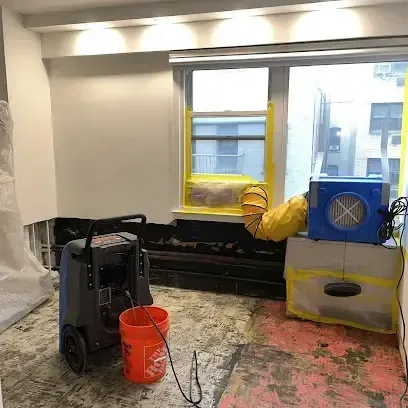
Water Damage Services for Local Homes and Businesses
Thirteen kinds of water loss are covered here, from monsoon runoff and burst pipes to slab leaks, sewage and commercial drying. Each card opens the full service page.
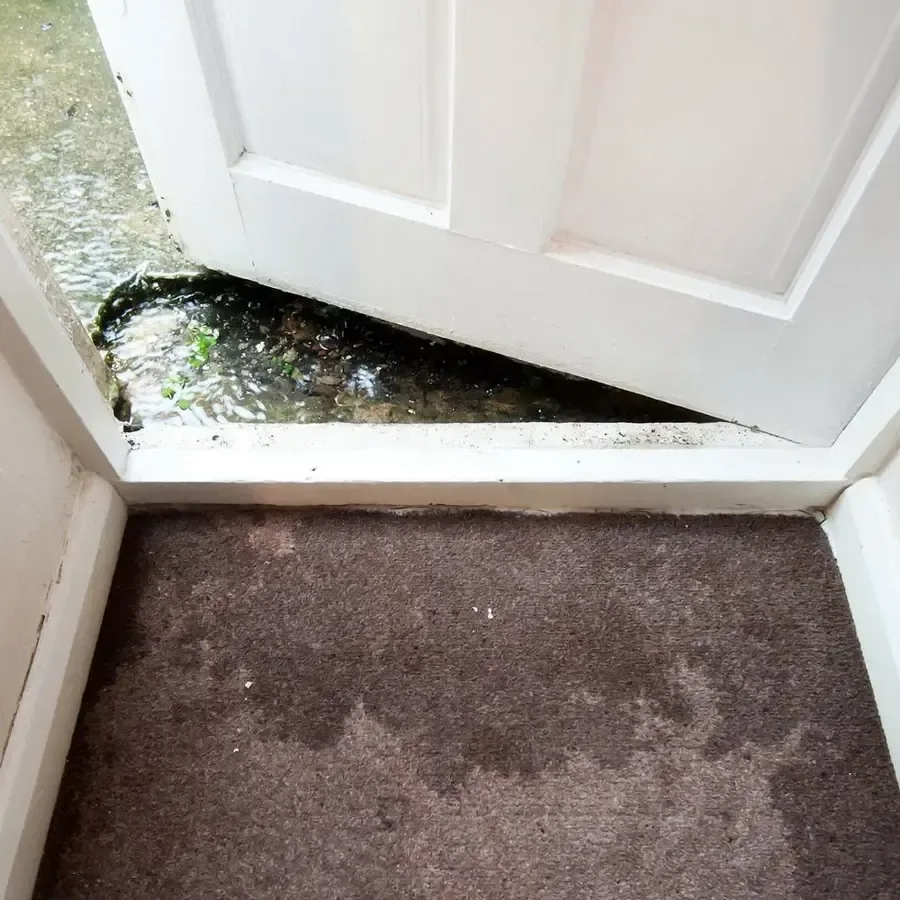 01Monsoon Storm Water DamageHigh winds push monsoon rain under doors and through roofs, leaving carpet and drywall soaked.View service
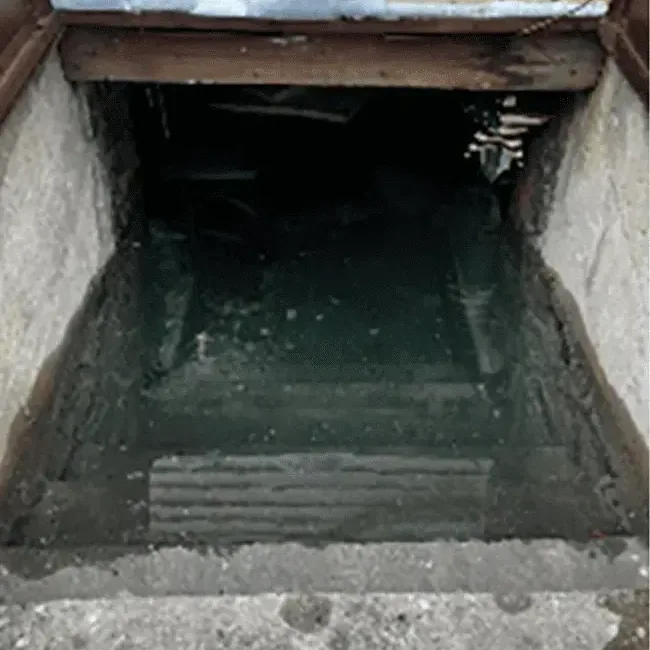 02Flash Flood CleanupSudden, torrential rain can put water inside quickly, and floodwater is treated as contaminated during removal and cleanup.View service
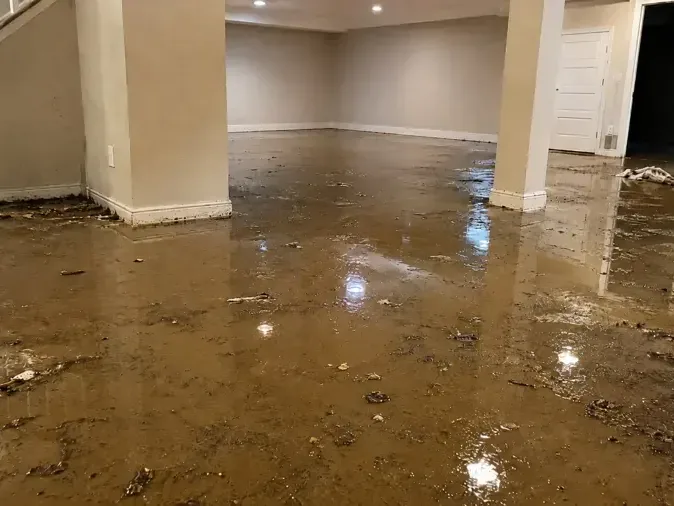
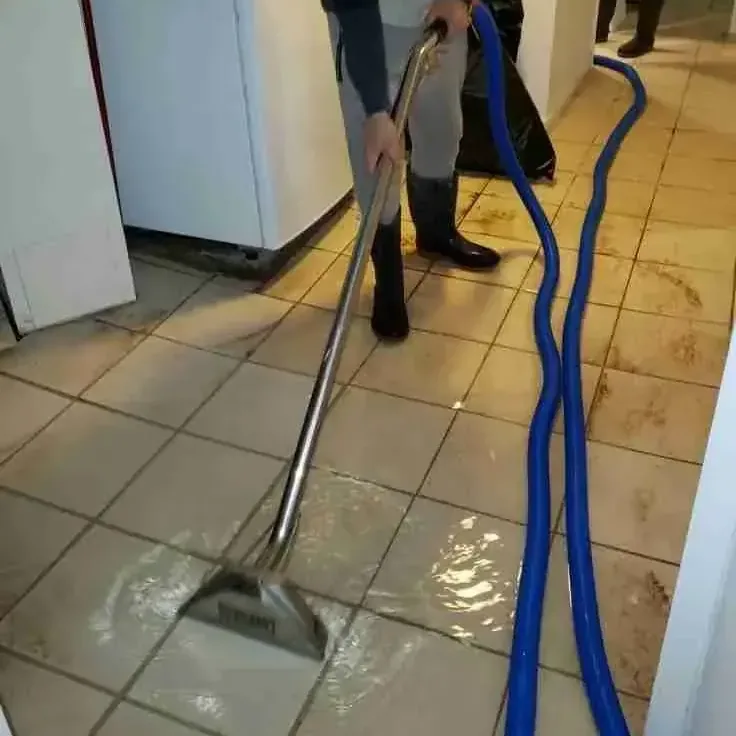 03Water Extraction and RemovalStanding water is pulled out first, because drying cannot begin until the pooled water is gone.View service
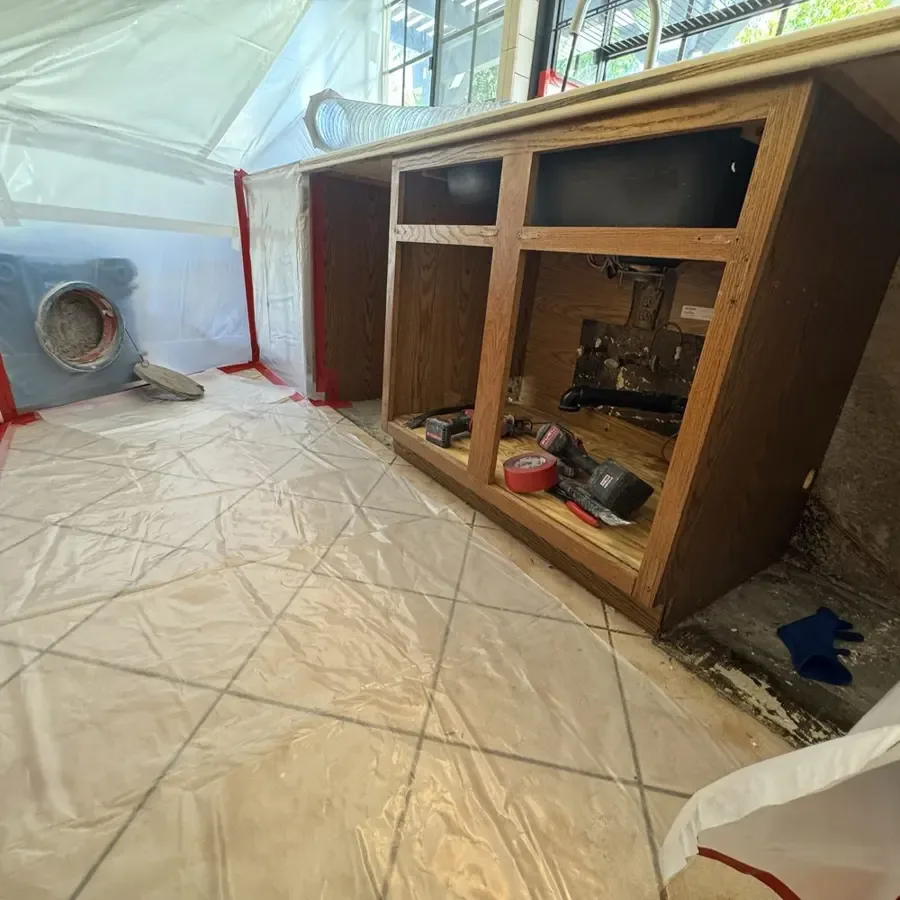 04Slab Leak Water DamageA leak under the floor slab can hide until flooring turns damp or walls show moisture.View service
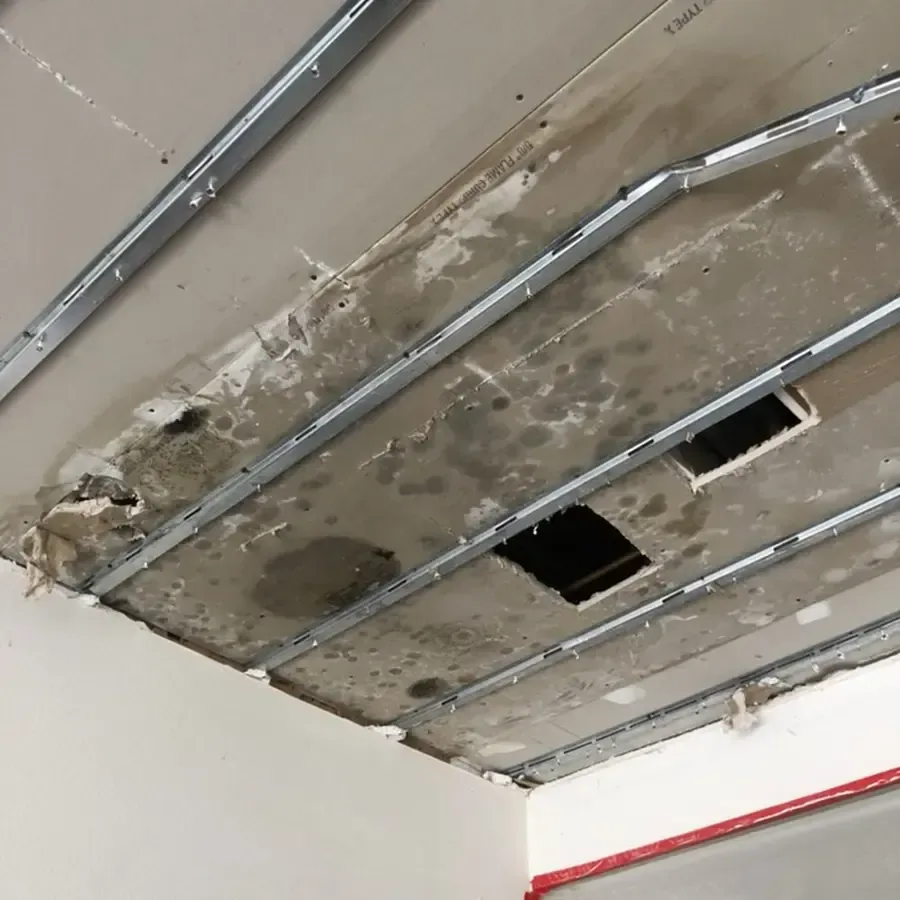 05Roof Leak Water DamageMonsoon rain tests the roof, then wet insulation and ceilings are dried once the leak is traced.View service
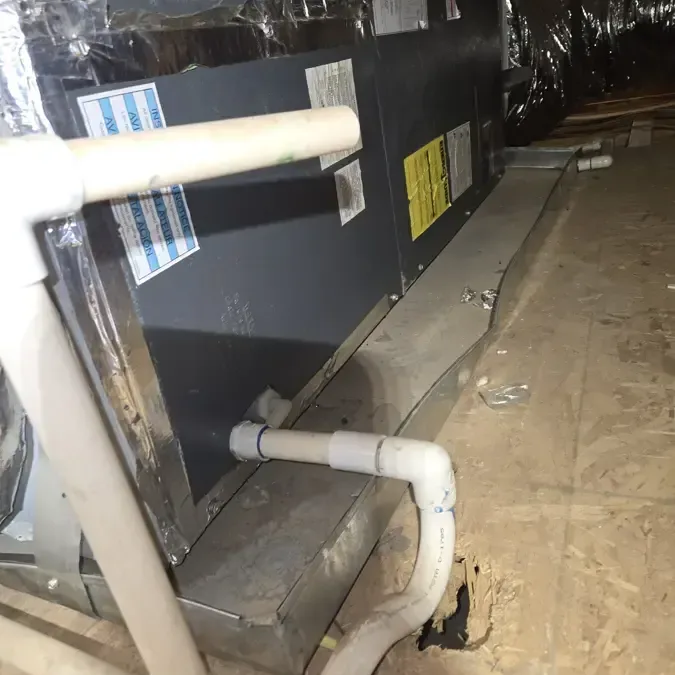 06AC Condensate and Cooler LeaksAir conditioners run hard all summer, and a clogged drain or full pan can wet ceilings and closets.View service
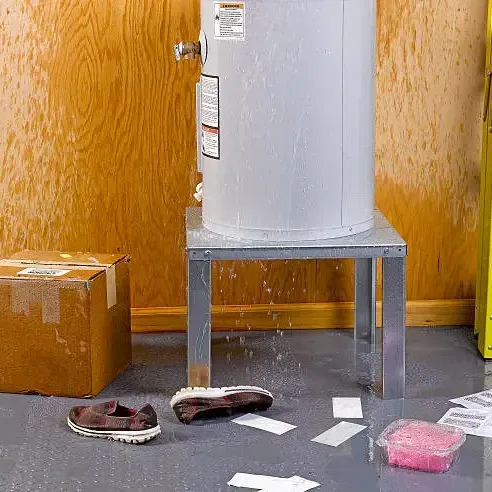 07Water Heater Leak CleanupA leaking tank is shut off, the water is extracted and the wet floor and walls are dried.View service
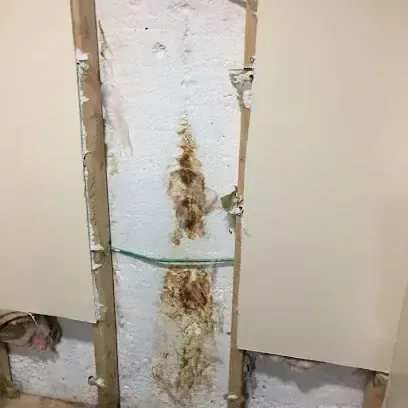 08Burst Pipe Water DamageA burst supply pipe means shutting off the water, extracting what spread and drying whatever got wet.View service
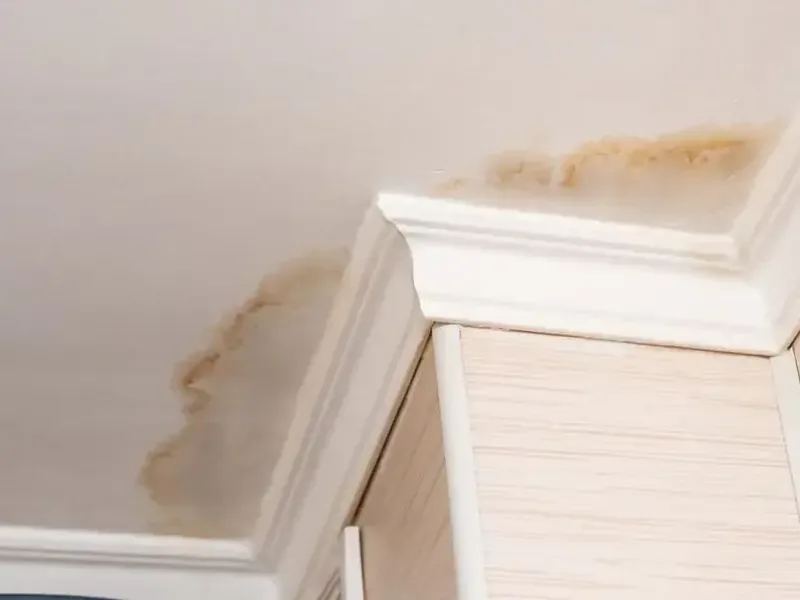
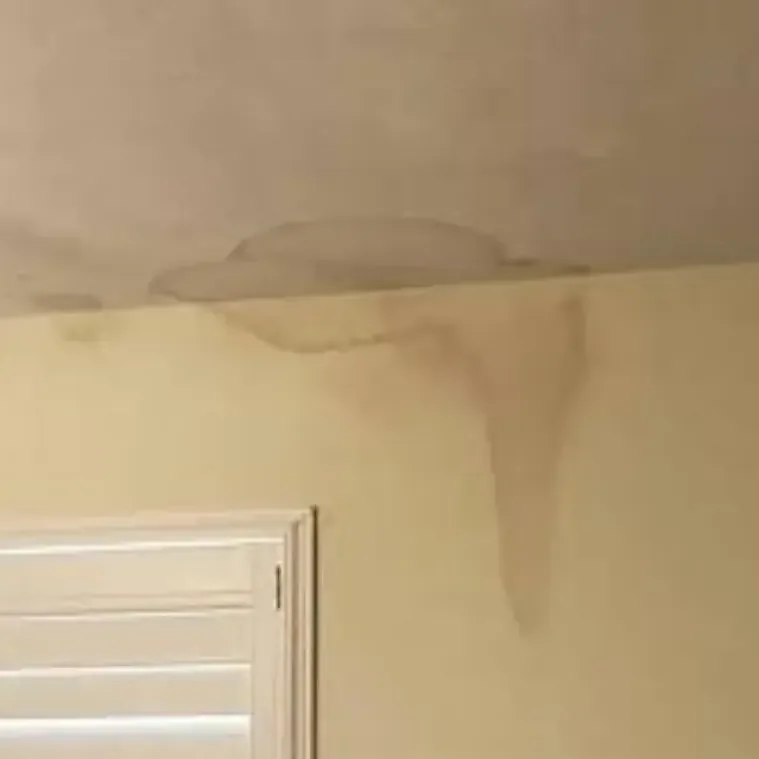 09Ceiling Leak Water DamageA ceiling stain may come from monsoon rain or air conditioner condensate, so tracing the source comes first.View service
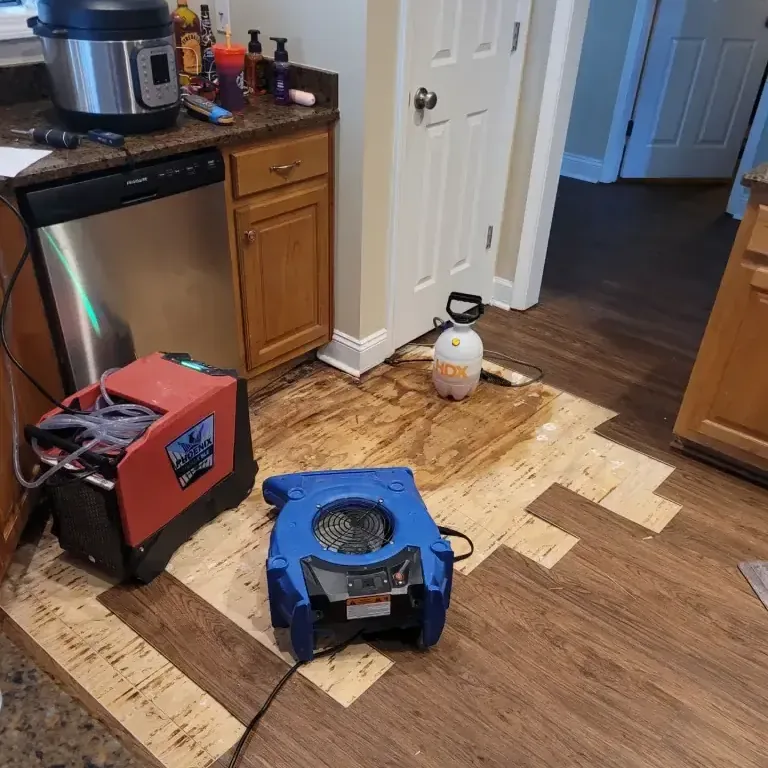 10Appliance and Supply Line LeaksA leaking washer, dishwasher or refrigerator hose can spread water under flooring and into the walls.View service
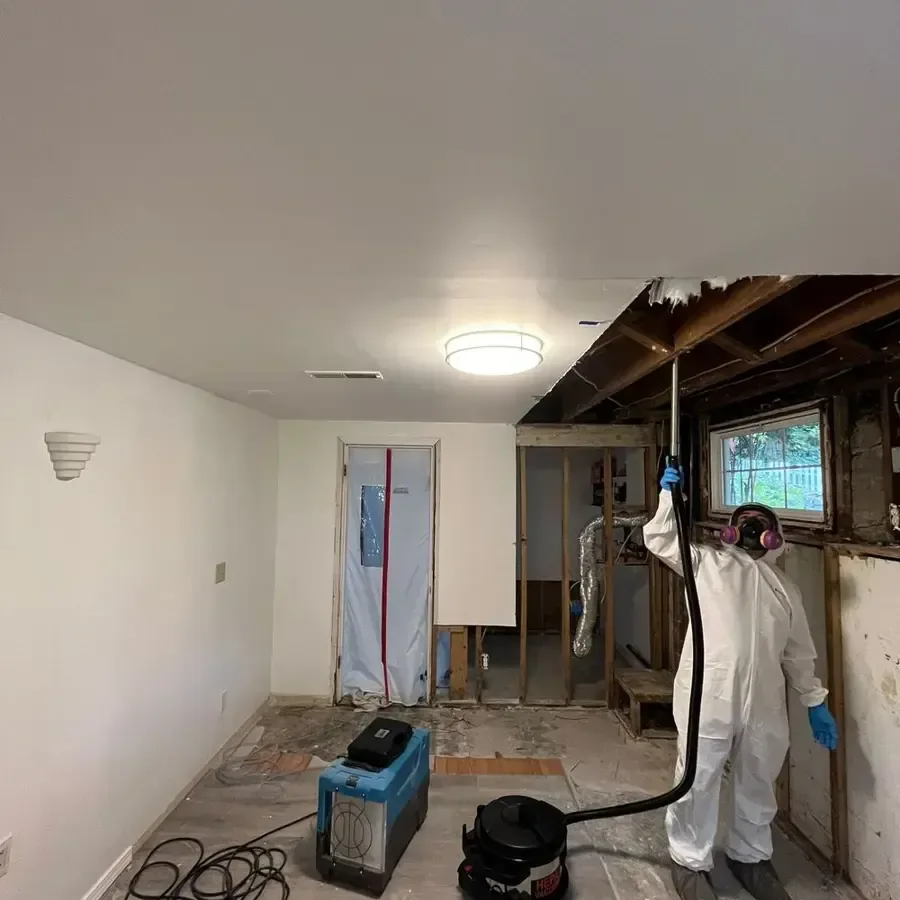 11Sewage Backup CleanupSewage backups bring contaminated water, so affected materials are removed and surfaces disinfected before any drying.View service
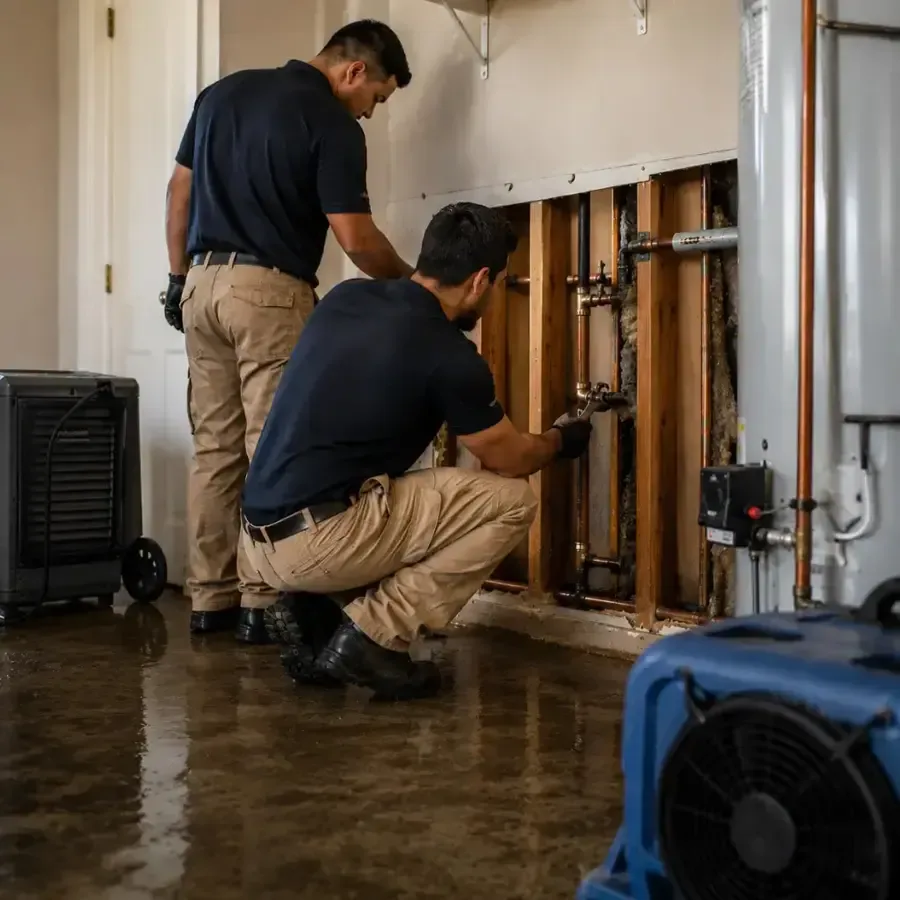 12Structural Drying and DehumidificationDrying follows moisture readings taken in walls, floors and framing, not a set number of days.View service
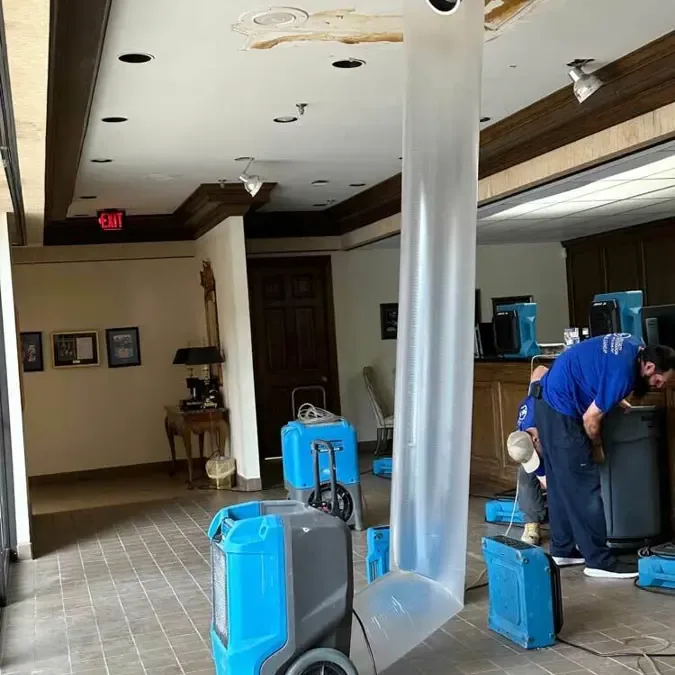 13Commercial Water DamageShops, offices and larger buildings need water out and drying done fast so closure time stays short.View service
What to do in the first moments after water gets in
Stop the source
Shut off the main valve if a pipe or appliance is leaking, and switch off power to wet areas only if it is safe to reach the panel.
Call a crew and describe the water
Say whether it is clean supply water, sewage or storm runoff, since each calls for a different response.
Photograph the damage
Take photos and video of wet walls, floors and belongings before anything is moved, and keep damaged items for the adjuster.
Lift small items
Move rugs, books and electronics off wet floors, and stay clear of ceilings that sag or drip.
Problems that homeowners here run into
Hidden leaks under the floor
A slab leak can wet flooring and walls quietly, so moisture mapping and careful tracing come ahead of any drying.
Slab leak water damageLeaking household appliances
A failed hose or drain behind a dishwasher or washer can run under flooring and into cabinets before anyone notices, especially in a busy household.
Appliance leak water damageSewage coming back up
Contaminated water means affected materials are taken out and surfaces are disinfected, never simply dried in place or left to air out.
Sewage backup cleanupCareful drying that is documented from the first reading
The work is organized around the building, not the clock: find the water, remove it, dry to readings and keep records the insurer can follow.
Source first
Supply water, sewage and monsoon runoff are handled differently, so the crew identifies what the water is before choosing the cleanup method.
Readings, not guesses
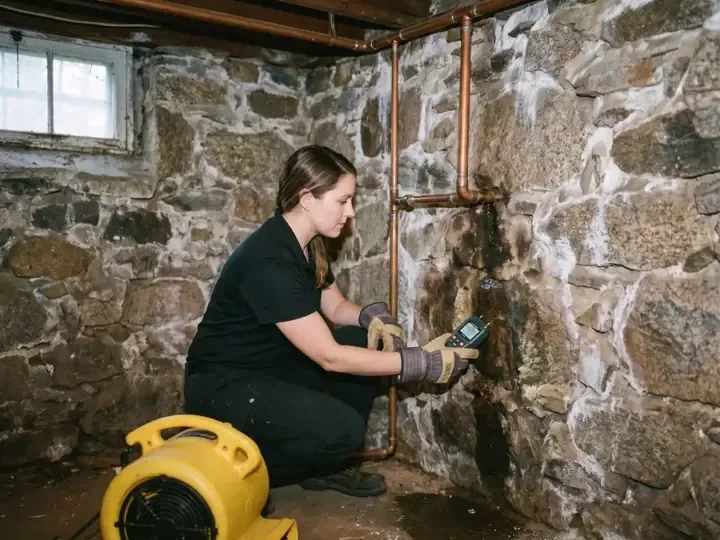
Moisture meters check walls, floors and framing at each visit, and equipment stays until the numbers show the materials are dry.
Clear records
Photos, readings and equipment logs are kept for every job, so an adjuster can see what was wet, what was removed and why.
Water and sewage only
The work stays focused on water and sewage losses, which keeps the equipment, training and process matched to the problem.
A repeatable process from the first call to final readings
Each job follows the same order so nothing is skipped: assess the damage, remove the water, dry the structure and confirm the readings before anything is rebuilt in a home or a shop.
- Assess. The crew checks the source, the water category and how far moisture has traveled through walls, floors and ceilings, using meters and a thermal camera where useful.
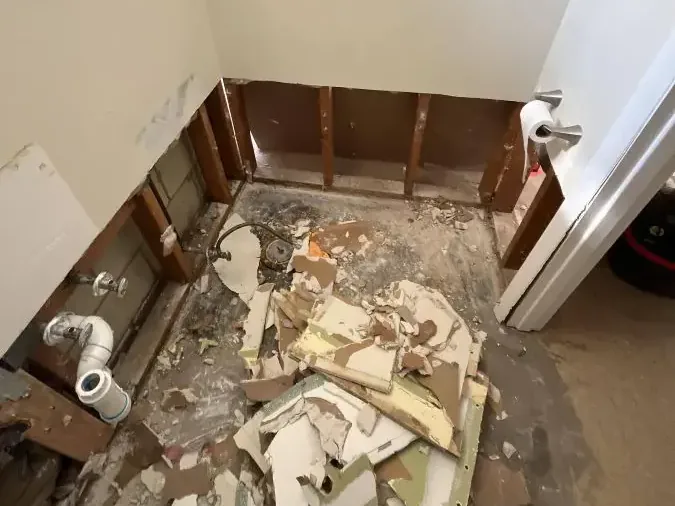
- Extract. Pumps and extraction wands remove standing water, and wet padding or other unsalvageable material is taken out and bagged, so the structure can start releasing moisture.
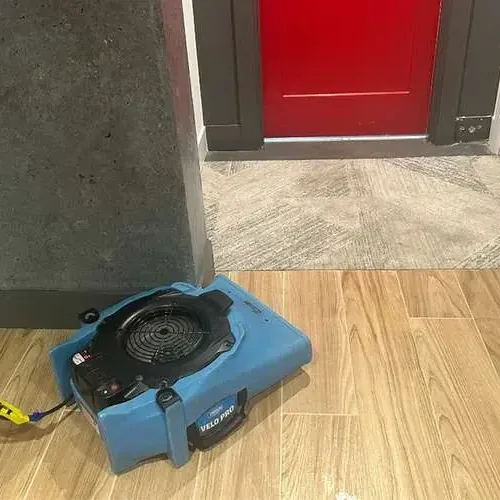
- Dry. Air movers and dehumidifiers are set in each affected area, then adjusted at every visit as the moisture readings drop toward the normal range for dry materials.
- Verify. Final readings are recorded, equipment is removed and the written record, with photos of each area, is ready for the adjuster before any repairs begin.
What water damage cleanup usually costs here
The final price depends on how much is wet, how long it sat and whether the water was clean, gray or sewage. The three ranges below show how scope moves the total for a typical home.
One room, caught early
- Standing water removed and the wet area dried
- Moisture readings at each visit
- Small flooring or baseboard cut-outs
Several rooms or a wet hallway
- Extraction across more than one room
- Drywall and insulation removal where needed
- Drying equipment placed in each area
Large, severe or contaminated
- Contaminated or widespread water removed
- Affected materials torn out and disposed of
- Extended drying with documented readings
Final pricing depends on the water source, the materials affected and how long the area stayed wet. The water damage cost calculator gives a quick starting point.
Documenting the loss for the insurer
A clear record makes a claim easier to follow. The crew captures the damage as it is found and keeps every reading, photo and equipment note.
- Photos of the damage taken before any cleanup starts
- Moisture readings from each affected room and surface
- Notes on the source and the type of water involved
- Equipment placement and run logs for each visit
- A list of materials removed and the reason for each
What the homeowner can do
Report the loss to the insurer promptly, and ask what the policy says about water damage before any large repairs are started, since coverage varies by policy.
Keep receipts for emergency costs and hold on to damaged items until the adjuster has seen them or approved removal.
Water damage service across Casa Grande
ZIP codes served
Reaching homes and businesses across the city
Crews work throughout the city, from homes and shops around Historic Downtown to schools, libraries and industrial buildings, whatever the size of the loss.
The same crews also cover Coolidge and other Pinal County communities, including properties near the junction of Interstate 8 and Interstate 10.
(888) 949-8496Call now to reach a crewMain roads and corridors
Nearby towns
What water damage cleanup looks like on the job
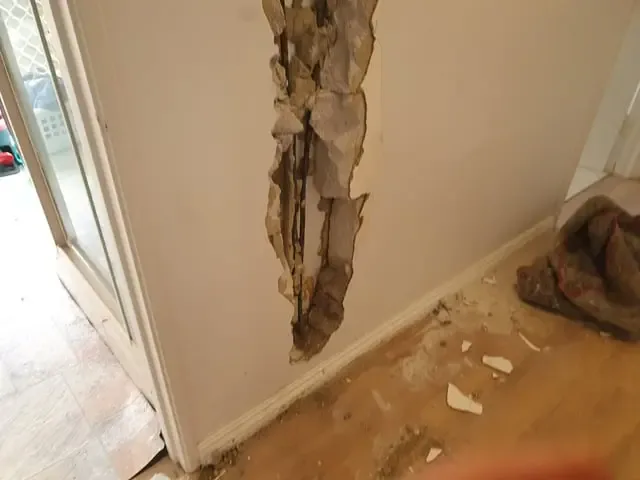
What puts Casa Grande properties at risk
Summers are long and extremely hot, then the monsoon arrives with high winds and heavy rain. Dust storms are common too, and the heat keeps air conditioners running hard for months on end.
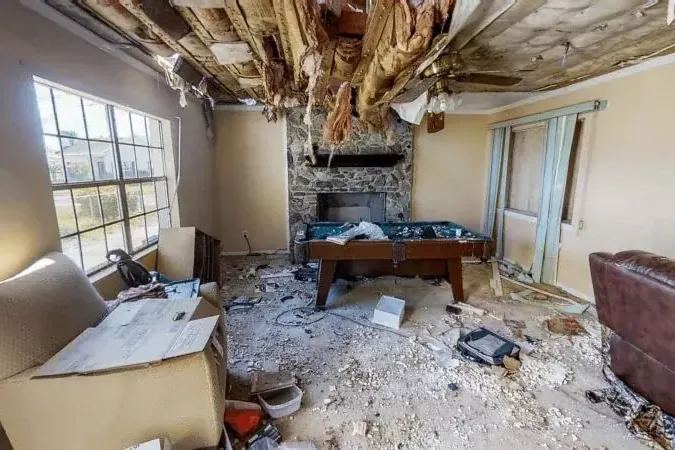
Every monsoon season: High winds and heavy rain arrive with the North American Monsoon each summer, and Arizona monsoon storms can cause flash floods across the region.
Monsoon wind and rain
High winds drive heavy rain under doors and windows and through roofs, soaking carpet and drywall in a short stretch of one storm.
Flash flooding
Rain here can be sudden, torrential and localized, and floodwater that enters a building is treated as contaminated, which changes how it is removed and what can be saved.
Cooling systems under strain
Long, extremely hot summers keep cooling systems running, and a clogged condensate drain can soak a ceiling or closet. See AC condensate leak cleanup.
Chilly winter nights
Winters are brief, but chilly evenings mean exposed pipes and outdoor hose bibs deserve care on cold nights.
Water supply outages
A Saturday night shutdown combined with a monsoon storm once cut water to areas north of Kortsen Road for part of a Sunday, so open taps are worth checking when service returns.
Hidden slab leaks
Leaks under a slab floor can stay out of sight until flooring or walls show moisture. See slab leak water damage for how the wet area is found.
Water damage questions from local homeowners
Water in the house right now?
Shut off the water if it is safe, lift valuables out of the wet area and call. The crew will talk through the source and the next steps.
(888) 949-8496 Reach a crew about waterWhat counts as water damage that needs professional drying?
Any water that has soaked drywall, flooring, insulation or framing, or any leak that has been running unnoticed. Surface wiping rarely reaches moisture inside walls, and damp materials can support mold growth in 24 to 48 hours.
How is flood water handled differently from a pipe leak?
Floodwater picks up dirt and contaminants, so it is treated as contaminated, while a clean supply leak is not. That changes what can be dried in place and what has to be removed.
What should happen before drying equipment is set up?
The water source is stopped and standing water is extracted first, because drying equipment cannot do its work while water is pooled on the floor. Wet padding and damaged materials are also taken out.
How long does drying take?
It depends on the materials and the moisture readings, not on a fixed number of days. Equipment stays until walls, floors and framing read dry, and the crew checks the numbers at each visit.
Can a slab leak be found without tearing up the floor?
Often the wet area can be located first with moisture meters and thermal imaging before any flooring is cut. Finding it precisely keeps the opening small and sets the drying plan.
Is sewage cleanup different from cleaning up clean water?
Yes. Sewage is contaminated, so affected materials are removed, surfaces are disinfected and only then is drying done. Porous items touched by it are usually discarded instead of saved.
Can an air conditioner leak stain a ceiling?
Yes. A clogged condensate drain or an overflowing pan can drip into the ceiling and nearby closets and walls. The leak is traced and stopped first, then the wet materials are dried.
Do outdoor pipes need protection in winter?
Winters are brief, but evenings can turn chilly, so exposed pipes and hose bibs are worth covering or draining on cold nights. A burst pipe is handled by shutting off the water, extracting and drying.
What records help with an insurance claim?
Photos taken before cleanup, moisture readings for each area, equipment logs and a list of removed materials make it easy for the adjuster to follow what happened. Coverage depends on the policy, so the insurer decides what is paid.
Does the service cover businesses as well as homes?
Yes. Shops, offices, schools and larger buildings are all covered, with the focus on keeping closure time as short as the drying allows. See commercial water damage for how those jobs run.
Water in a Casa Grande home or shop needs attention now
Call now to describe what happened, and the crew will explain the extraction and drying steps that fit the damage.
(888) 949-8496Talk to a crew now