Water Extraction and Removal in Gilbert
Standing water on a floor keeps soaking into carpet, baseboards and walls until it is pulled out. The crew identifies the source first, then extracts all the water and sets up the drying equipment.
(888) 949-8496Call to start extraction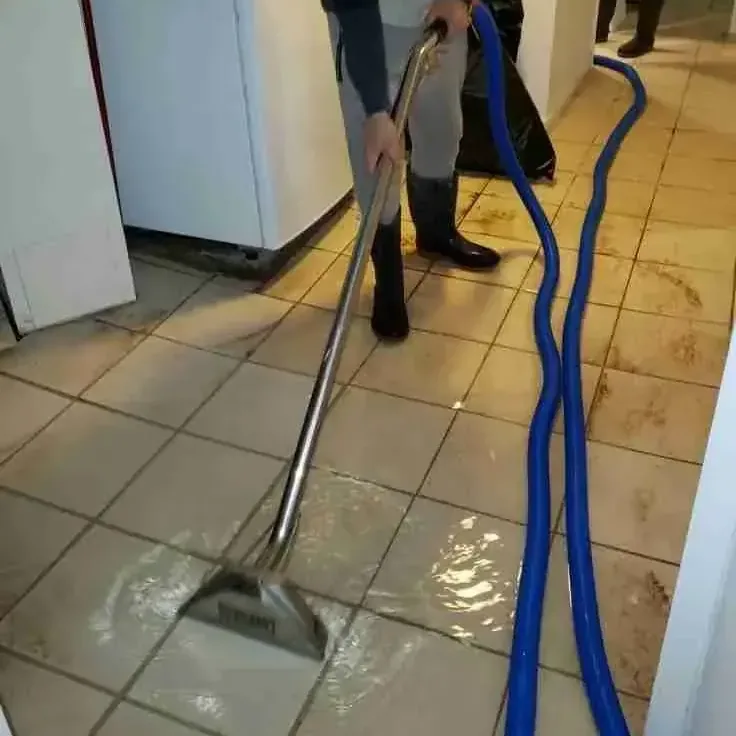
What to do right now about water extraction and removal
Water pooling on the floor? Extraction goes best when the source is known and the pumps start early.
(888) 949-8496Request pumps and wands- Shut off the source. Close the valve for a clean leak, or keep people out of a sewage backup.
- Switch off nearby power. Cut power to wet rooms at a dry panel and unplug anything in the water.
- Photograph the water. Take photos of the depth and affected rooms before pumps change the scene.
- Call the crew. Pumps and wands remove the water, and drying equipment is placed for what remains.
What does water extraction and removal cost in Gilbert, AZ?
Extraction on its own usually runs from about $500 for a small area to $14,000 for a large spread, and the figure climbs when drying equipment and material removal are added on top.
Small area
- Wand extraction on one surface
- Spot moisture checks
- Brief equipment setup
Room or two
- Pump and wand work
- Wet pad lifted
- Drying fans placed
Large spread
- Several rooms reached
- Extended pumping
- Readings logged daily
Ranges are typical, not a quote. The category of water, the square footage, the material class and how fast drying started move the total most. Try the water damage cost calculator for a closer range.
How water extraction and removal is handled in Gilbert
Trace
The source is found and its type confirmed.
Pump
Deep water is cleared with submersible pumps.
Wand
Remaining surface water is pulled with extraction tools.
Dry
Equipment is placed for the moisture left behind.
Understanding water extraction and removal
In Gilbert, the water on the floor usually came from one of three places: a supply pipe or appliance, a sewage backup, or storm runoff. Extraction looks similar from the doorway, but each source needs different handling before the first pump is switched on, and a wrong first move can spread contamination through the house.
Why the source decides the plan
- Clean supply water can be extracted right away and the materials often saved
- Sewage needs containment and protective gear before any water is moved
- Storm runoff carries dirt, so soaked porous items are removed
- An unknown source is treated cautiously until it is traced
Matching the response to the source protects both the crew and the home.
What extraction involves
Submersible pumps clear deep water, and extraction wands pull the film that remains on tile, vinyl and wood. Carpet is extracted in passes, and pad that cannot be dried is lifted out so the subfloor can breathe. Tile, vinyl and sealed concrete respond quickly, while hardwood and laminate need care because they take up water at the seams.
Why drying follows closely
Removing the surface water is only the start, because moisture stays in the drywall, baseboards and subfloor. Air movers and dehumidifiers follow extraction, and the structural drying page explains how readings show when the structure is dry.
Records before cleanup
Photos of the standing water and the first meter readings are taken before cleanup changes the scene. They give the adjuster a baseline, and later readings show how completely the water was taken out of the structure.
Public references
For background beyond this page, see CDC, Floods and your health and Arizona Department of Insurance and Financial Institutions.
Water extraction and removal across Gilbert and nearby communities
Extraction calls are handled across Gilbert, including ZIP codes 85233, 85296 and 85298, near the Heritage District and along Gilbert Road, with portable pumps carried into the house.
The same service nearby: water extraction and removal in Florence, Queen Creek, Apache Junction.
Water Extraction and Removal questions, answered
Still dealing with it?
Water pooling on the floor? Extraction goes best when the source is known and the pumps start early.
(888) 949-8496 Request pumps and wandsWhat is the difference between extraction and drying?
Extraction removes liquid water from surfaces, while drying pulls moisture out of materials such as drywall and framing. Both are needed, and extraction always comes first.
Can the crew extract water from carpet?
Yes. Carpet is extracted in passes, and the pad underneath is lifted if it cannot be dried, which is common after a larger spill or a longer soak.
Does the water source change how extraction is done?
Yes. Clean supply water, sewage and storm runoff each need different handling and protective steps before pumping begins.
Is extraction enough by itself?
Rarely. Moisture stays in drywall, baseboards and subfloor, so drying equipment normally follows. See burst pipe damage for a typical sequence.
What if the water has been standing for a day?
Extraction still comes first, but affected materials may need removal, since growth can begin within 24 to 48 hours on damp surfaces.
Pull the water off before it spreads
Tell the crew what the water came from and which rooms it reached, and the pumps, wands and drying plan are matched to that.
(888) 949-8496Book extraction