Slab Leak Water Damage Cleanup in Gilbert
A pipe leaking under a concrete floor can run for weeks before a damp spot, a warm tile or a rising water bill gives it away. Moisture checks trace the wet area, then the flooring is dried or removed.
(888) 949-8496Call about a floor leak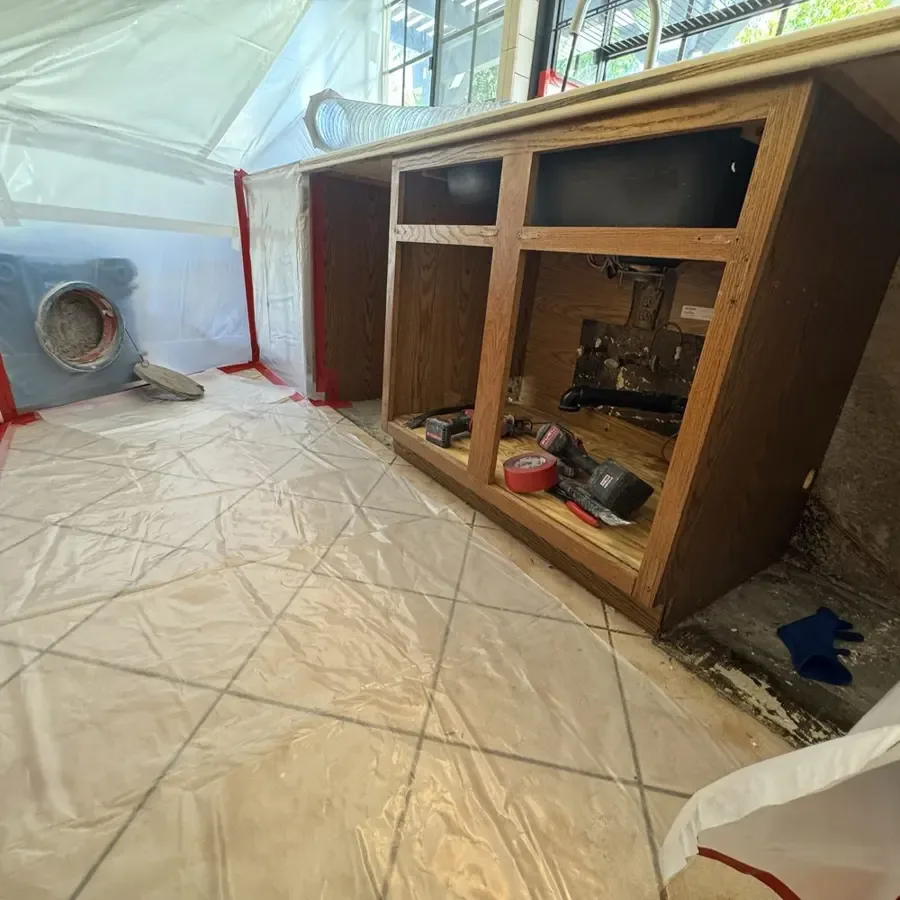
What to do right now about slab leak water damage
A damp floor with no spill, or a water bill that keeps climbing? The cleanup crew can check the moisture.
(888) 949-8496Ask about a floor check- Close the main valve. Turning off the water to the house stops a suspected slab leak while the meter and floor are checked.
- Note the signs. Write down where the floor feels damp or warm and when the water bill began to climb.
- Photograph the floor. Take photos of stains, lifting planks and swollen baseboards before anything is moved.
- Call a plumber and the crew. The plumber repairs the pipe, and the crew dries the flooring and walls that took on water.
What does slab leak water damage cost in Gilbert, AZ?
Slab leak cleanup runs from $2,500 when the leak is found early to $16,000 or more for a long-running leak, because the longer the water spread, the more flooring and wall has to come out and be dried.
Leak found early
- One room affected
- Spot flooring removal
- Drying equipment
Kitchen and great room
- Wider flooring removal
- Baseboards replaced
- Daily readings
Long-running leak
- Extended drying
- Wall cuts
- Detailed records
Ranges are typical, not a quote. The category of water, the square footage, the material class and how fast drying started move the total most. Try the water damage cost calculator for a closer range.
How slab leak water damage is handled in Gilbert
Map
Moisture meters trace the wet floor area.
Open
Damaged flooring and baseboards are removed.
Dry
Equipment runs until concrete readings settle.
Log
Photos and readings go in the file.
Understanding slab leak water damage
A slab leak is a pipe leaking beneath the concrete floor, and the moisture it releases travels sideways into flooring, baseboards and the lower part of the walls, often well away from the actual break. Each floor is checked on its own readings, since the pattern of the dampness shows where the water has traveled and how far it went.
Signs worth checking
- A cool or damp patch on tile, or planks lifting at the seams
- Baseboards that swell or stain without a visible spill
- A water bill that rises with no change in use
- The sound of running water when everything is off
Any one of these calls for a moisture check.
Finding the wet area
A moisture meter and thermal tools map where the dampness is strongest, which helps a plumber locate the leak. The crew does not repair pipes, so the plumber and the cleanup crew work in sequence.
Cleanup after the leak is found
Once the pipe is stopped, wet flooring is lifted, baseboards are removed where needed, and air movers and dehumidifiers dry the slab edges and lower walls. Concrete holds moisture for a long time, so readings continue until the surface settles.
Records for the claim
Insurers often want to know how long a leak ran. Meter maps, dated photos and drying logs give an adjuster that picture of the loss from start to finish, and the water extraction work shows what happens when visible water is present too.
Public references
For background beyond this page, see EPA WaterSense, Fix a Leak Week and Arizona Department of Insurance and Financial Institutions.
Slab leak water damage across Gilbert and nearby communities
Floor leak calls come from homes across the town in ZIP codes 85234, 85296 and 85299, from streets near the Heritage District to areas along Chandler Boulevard and Gilbert Road.
The same service nearby: slab leak water damage in Florence, Queen Creek, Apache Junction.
Slab Leak Water Damage questions, answered
Still dealing with it?
A damp floor with no spill, or a water bill that keeps climbing? The cleanup crew can check the moisture.
(888) 949-8496 Ask about a floor checkWhat is a slab leak?
A slab leak is a pipe leaking beneath the concrete floor of a house. The water spreads sideways and surfaces through flooring, baseboards and the lower walls, sometimes a good distance from where the pipe actually failed.
Does the crew fix the pipe?
No. A plumber locates and repairs the leak, and the crew handles the wet flooring, baseboards and drying that follow once the pipe is stopped.
How is the wet area found?
Moisture meters and thermal tools show where the dampness is strongest, and those readings inform both the plumber and the cleanup that comes after. A cool, damp patch on tile often marks the area worth checking first.
Can tile or wood flooring be saved?
Sometimes. Tile may dry in place, but wood and laminate often cup, so each floor is checked with a meter before a decision is made about replacing it. Grout and subfloor edges are checked as well.
Why does concrete take so long to dry?
Concrete holds moisture deep inside, so surface readings can look dry before the slab is. Readings continue until they settle, as the structural drying page explains.
A hidden leak needs a clear map
Describe the signs on the floor and the crew can explain how readings trace the moisture, then plan the drying once the pipe is repaired.
(888) 949-8496Check the floor