Water Damage Restoration in Queen Creek, AZ
A monsoon downpour under a slider, a supply pipe split inside a wall or an air conditioner drain spilling over in summer heat all begin the same way: standing water pulled out, then the structure dried by the readings.
(888) 949-8496Send a drying crew to your addressActive water is treated as urgent day or night, from Harvest on the south side to the established streets of Spur Cross.
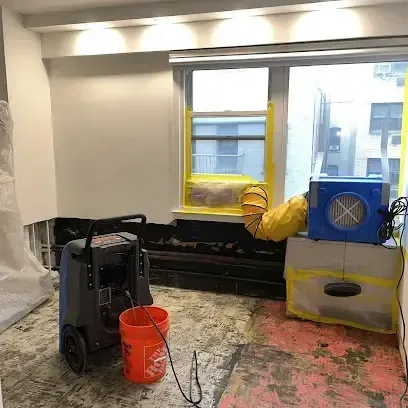
Every kind of water loss, handled here
Where the water came from decides the first move, so every service below starts by finding the source and stopping it, then moves to extraction and drying.
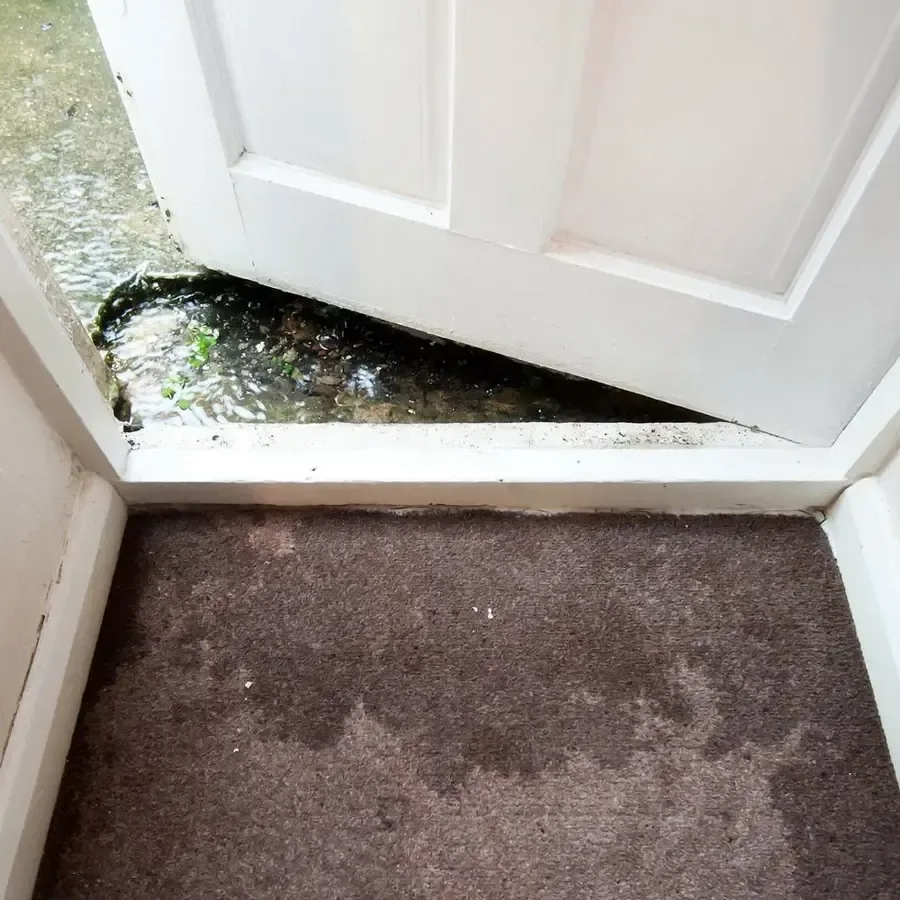 01Monsoon Storm Water DamageMonsoon rain driven under doors and through roofs is pumped out and the soaked materials are dried.View service
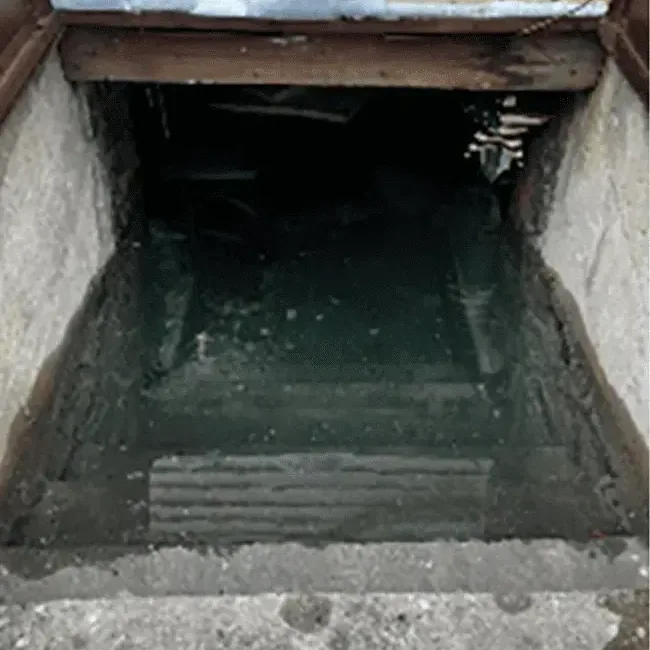 02Flash Flood CleanupRunoff that reaches a house after a heavy downpour is removed along with the debris it carried in.View service
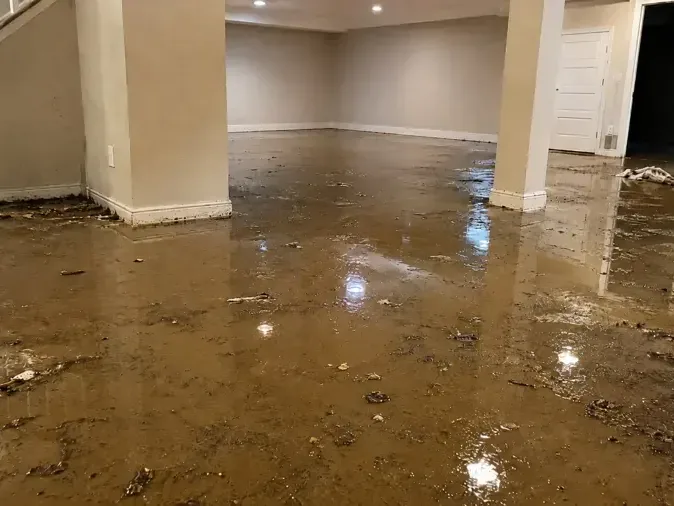
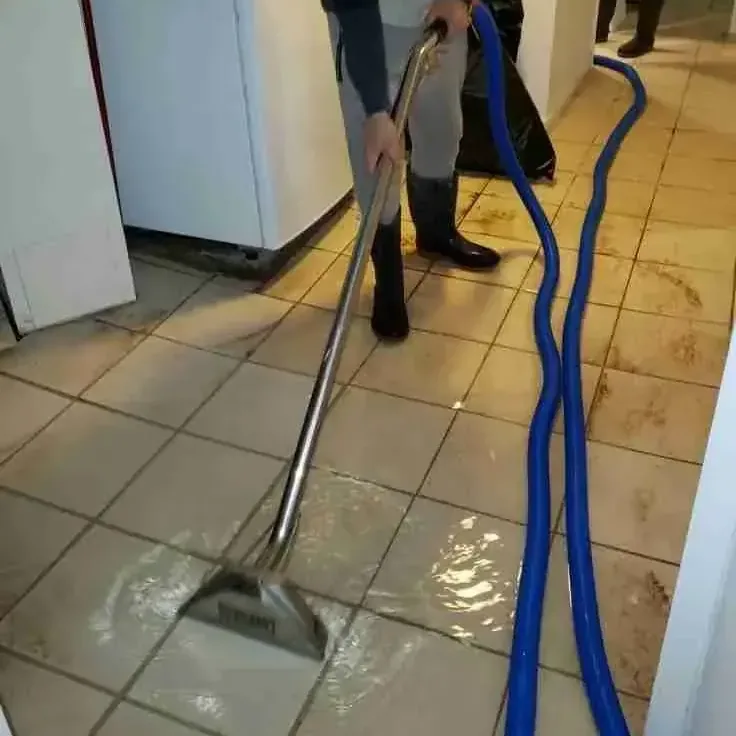 03Water Extraction and RemovalStanding water comes off floors and carpet with powerful extractors before it can soak into the subfloor.View service
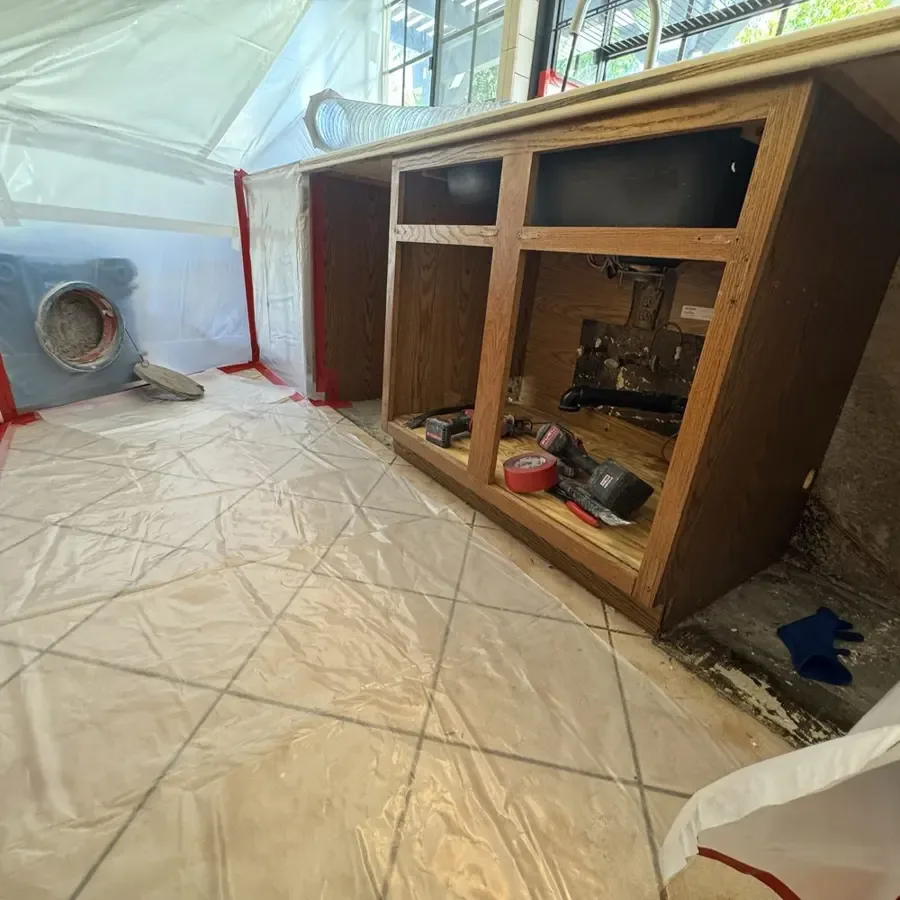 04Slab Leak Water DamageA hidden leak under the floor is traced first, then the wet flooring and the concrete are dried.View service
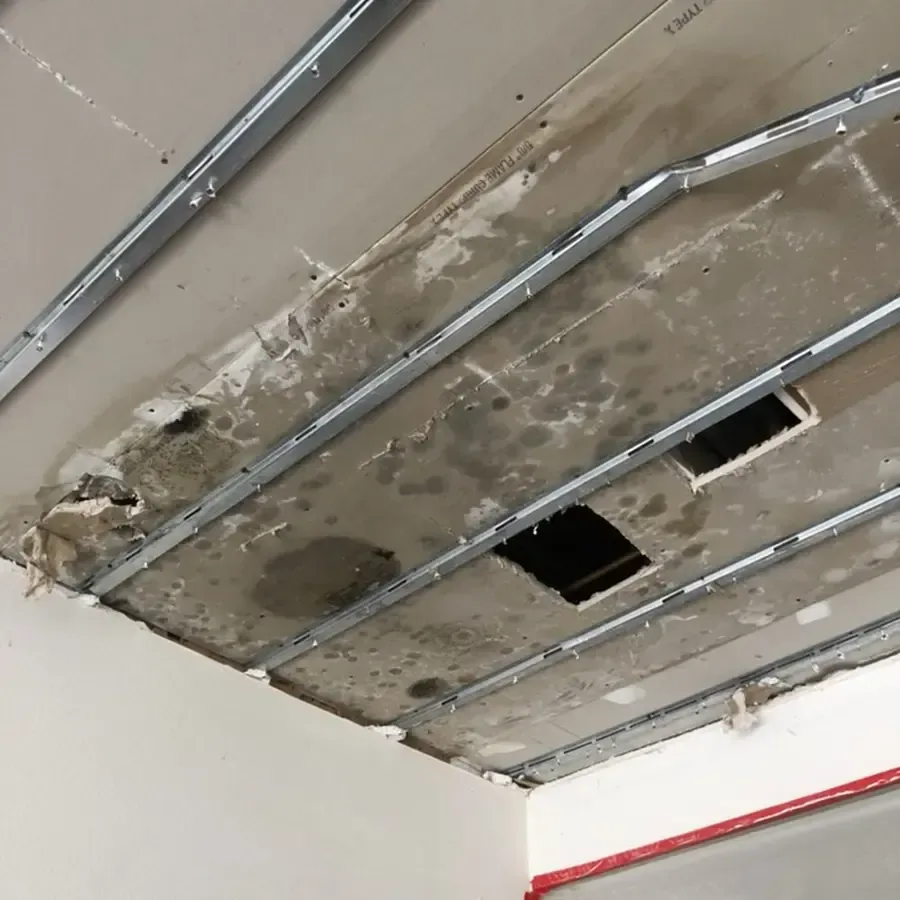 05Roof Leak Water DamageWater that gets through the roof is followed down through insulation, ceilings and walls and dried at every layer.View service
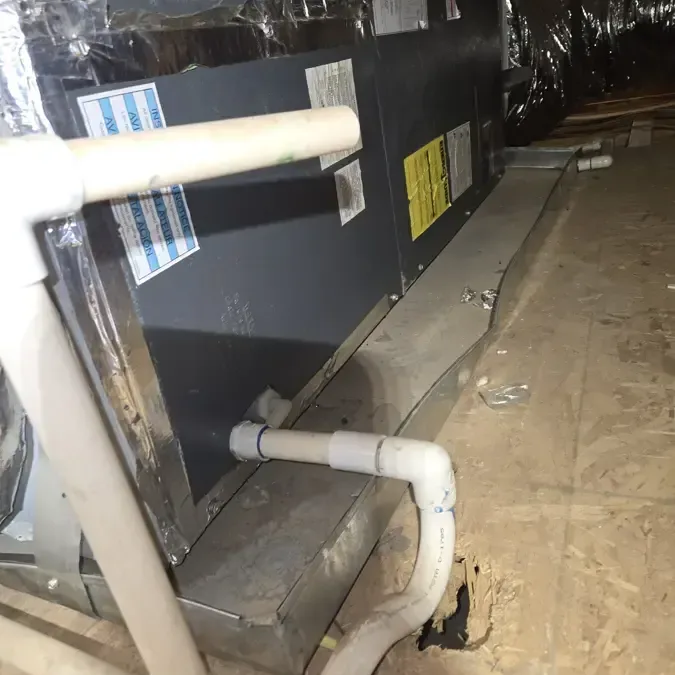 06AC Condensate and Cooler LeaksA clogged condensate drain or leaking unit can wet ceilings and closets, and the damp materials get dried.View service
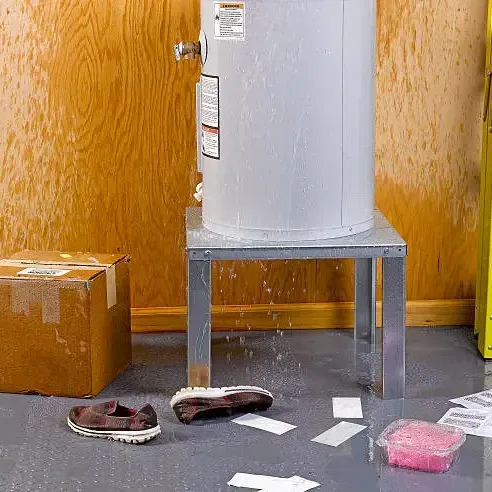 07Water Heater Leak CleanupA leaking tank gets its supply shut off, then the pooled water is extracted and the nearby materials dried.View service
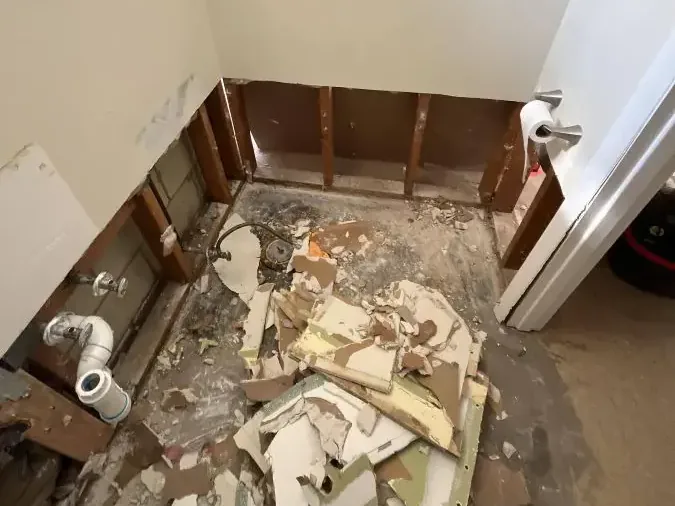
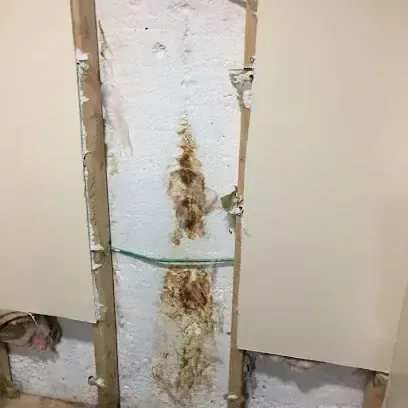 08Burst Pipe Water DamageA split supply pipe is shut off, the floors are extracted and wet drywall is opened up to dry.View service
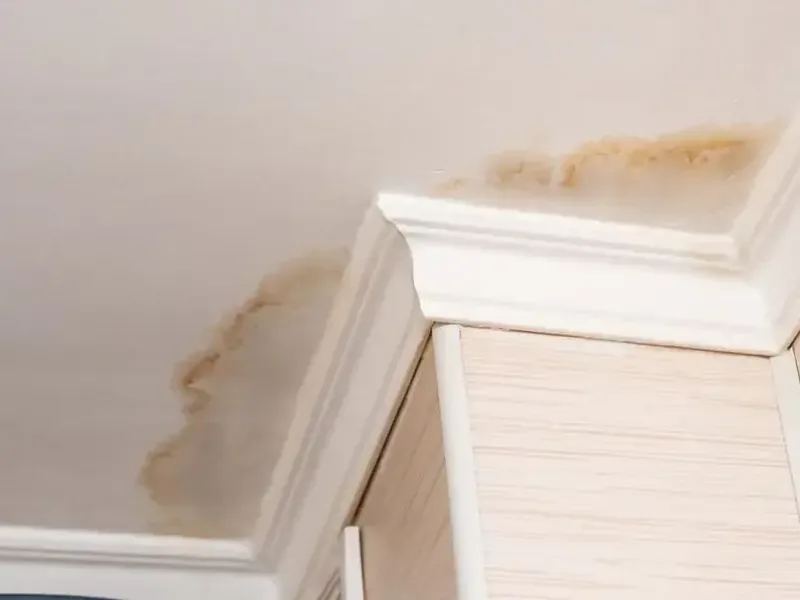
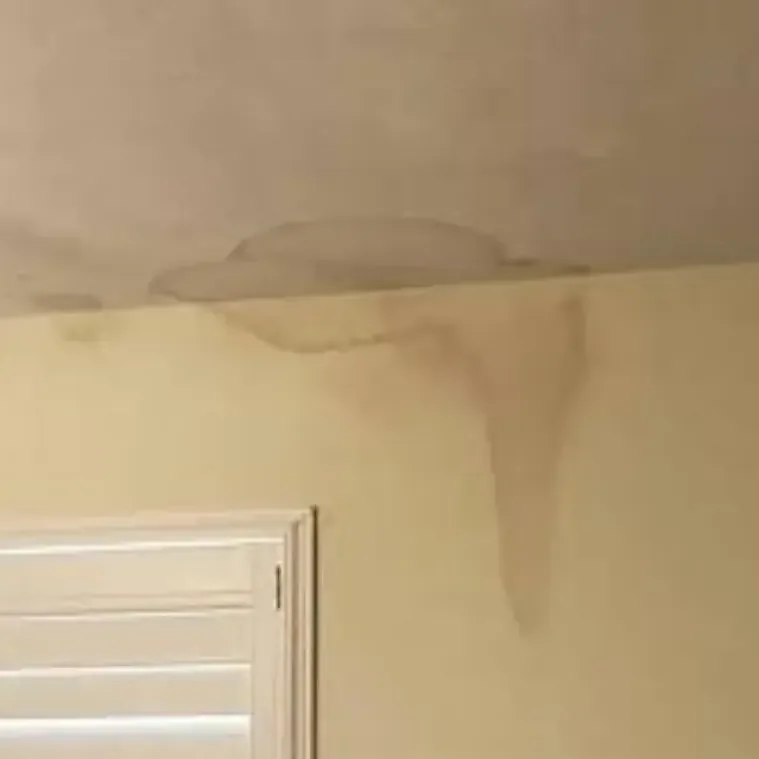 09Ceiling Leak Water DamageA spreading ceiling stain is traced to its source, then wet drywall and insulation are removed and dried.View service
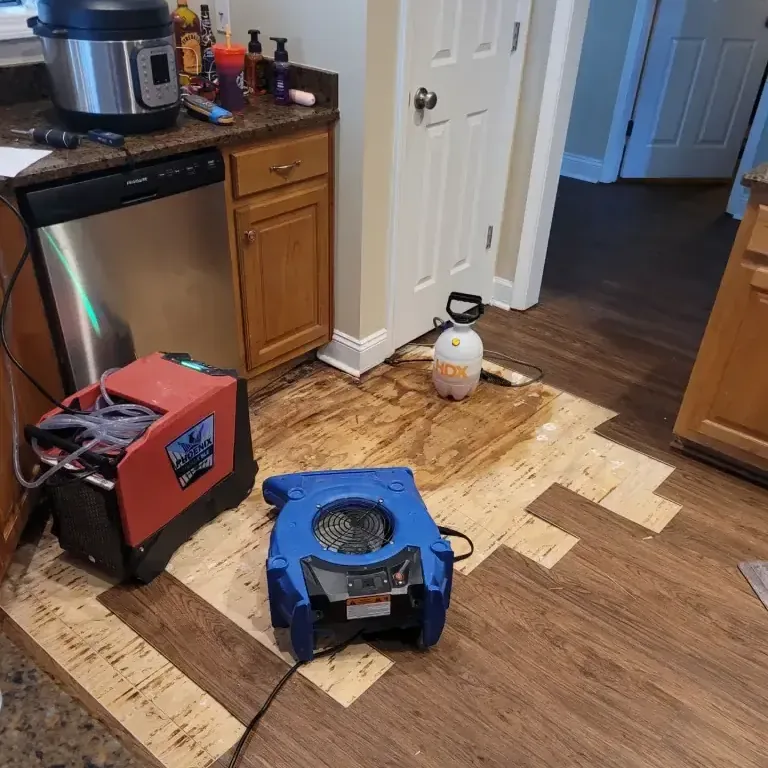 10Appliance and Supply Line LeaksWashers, dishwashers and refrigerator supply hoses can leak for days, so the source is found and the floor dried.View service
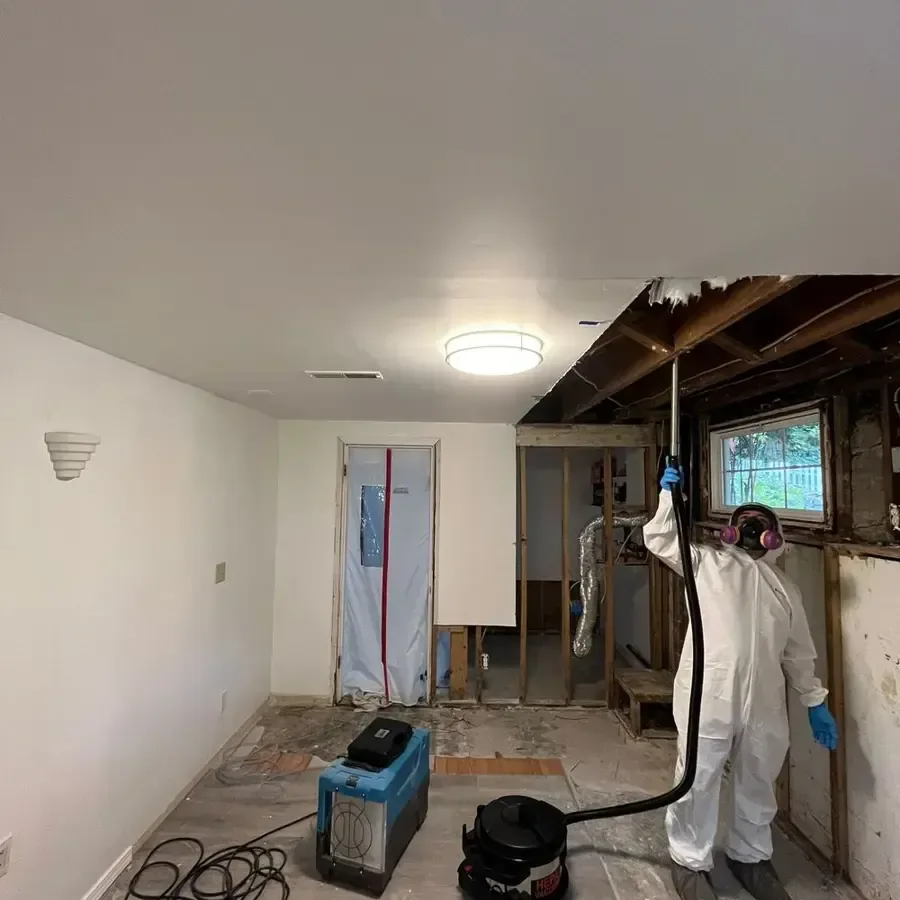 11Sewage Backup CleanupA sewage backup calls for protective gear, careful removal and cleaning of every surface the water touched.View service
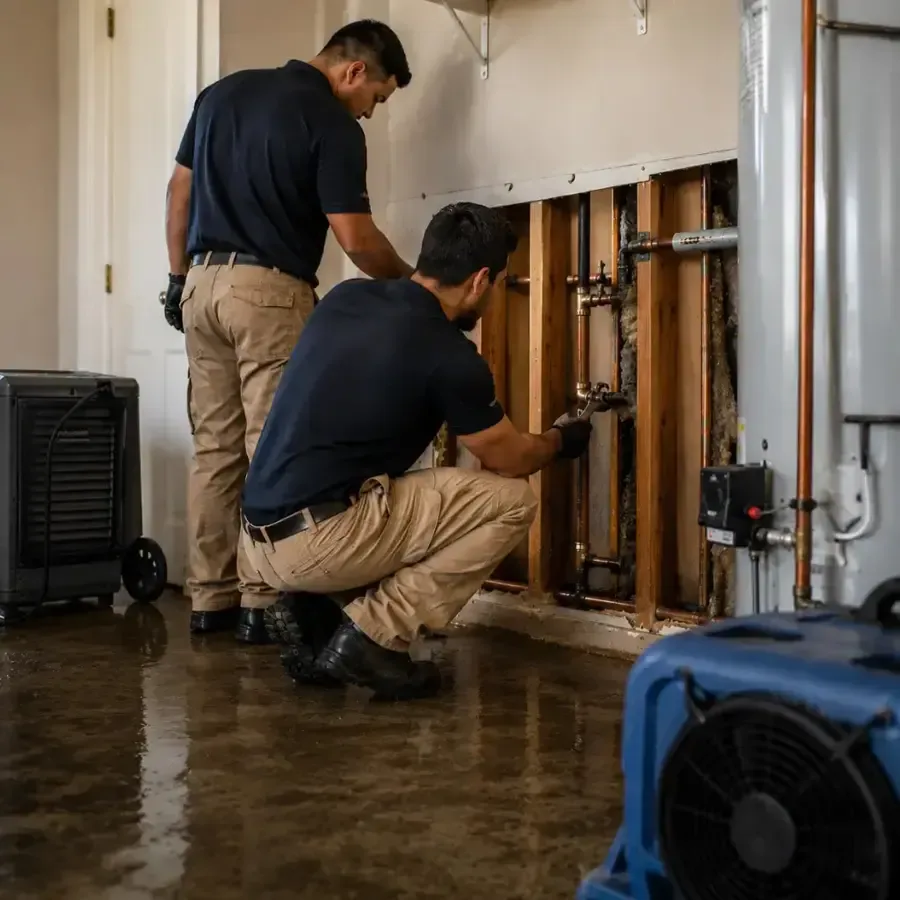 12Structural Drying and DehumidificationMoisture readings in the framing, subfloor and walls decide when the drying equipment is switched off.View service
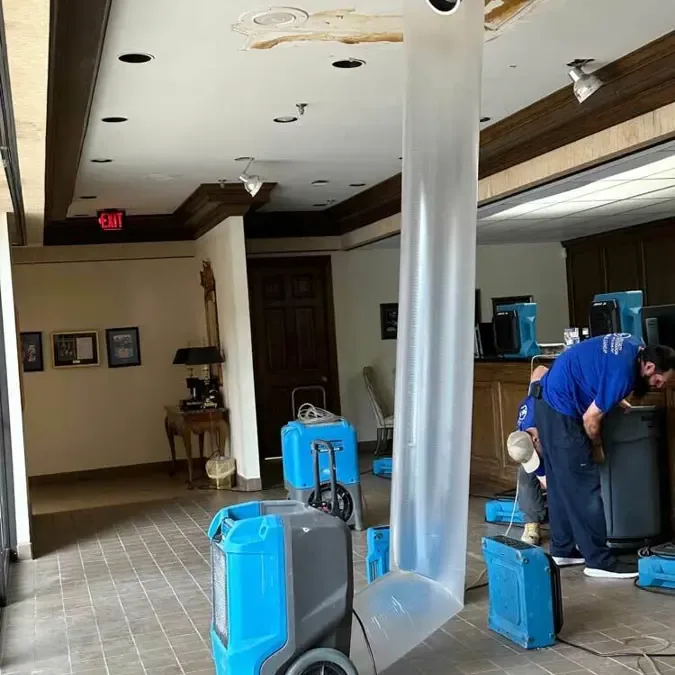 13Commercial Water DamageShops, offices and school buildings get a drying plan scoped to the suite or the whole building.View service
What to do while the water is still spreading
Stop the source
Close the main water valve or the appliance shutoff if it can be reached safely, and switch off power to wet rooms.
Lift what can move
Raise small furniture, rugs and electronics out of the wet area, and leave soaked drywall and carpet alone for the crew to assess.
Photograph everything
Take pictures of the water, the damage and any appliance involved before things are moved, because the adjuster will want them.
Phone the crew
Reach the crew at any hour. Standing water travels into the subfloor and wall bottoms the longer it sits.
Pick the problem that matches yours
Leaks you cannot see
A damp floor, a warm spot underfoot or a meter that keeps turning can mean a leak below the surface.
Read about slab leaksRain through the door
Monsoon wind can push water under a slider or through a failing seal, leaving carpet and wall bottoms soaked.
See storm water cleanupSewage in the house
When a drain backs up into a tub or floor drain, the water is unsanitary and needs protective gear and careful cleaning.
See sewage backup cleanupWater treated as urgent at any hour
Water does not wait for business hours, and it can wick into drywall and flooring fast. The crew finds it, removes it and dries what it touched.
Readings first
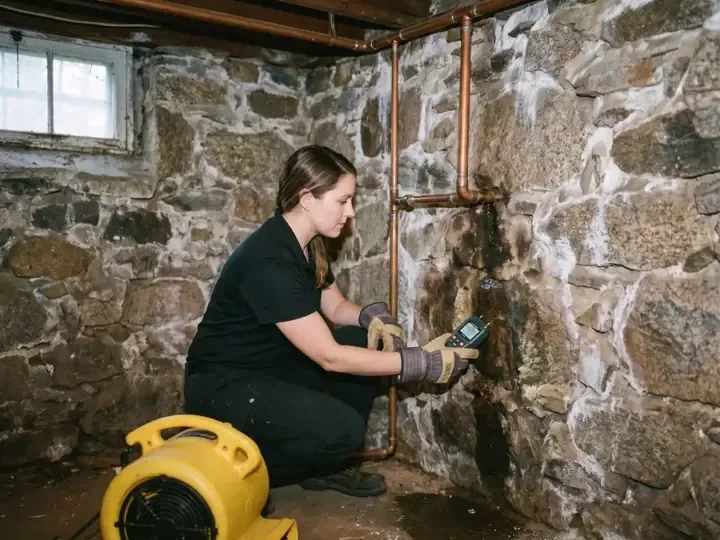
Moisture meters and thermal imaging show where the water actually went, so equipment sits where it is needed and dry walls stay closed.
A record for the adjuster
Photos, moisture logs and equipment notes are kept for each job, so the insurer sees what was wet, what was removed and when it dried.
Water and sewage only
The crew works on clean water leaks, storm water and sewage backups, from one wet cabinet to a flooded floor, and nothing outside that scope.
Scope before work
The scope and price range are explained before demolition starts, so nobody is surprised by what gets opened up or removed.
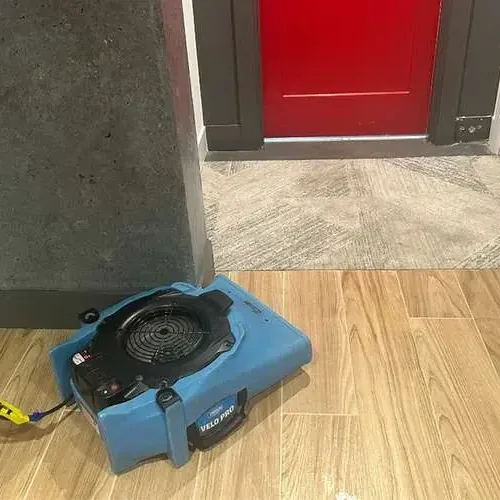
Dry means measured, not guessed
Drying is judged against readings from dry materials in the same home, not a calendar. Equipment stays until the framing, subfloor and walls read dry, and the log shows it.
- Assess. A moisture meter and thermal camera map the wet area, and the water source is confirmed and stopped before any equipment is set.
- Extract. Standing water is removed first with extractors, then wet carpet pad and soaked materials that cannot be saved are cut out and hauled off.
- Dry. Air movers and dehumidifiers run on the remaining structure, and the equipment is moved as readings change from room to room.
- Verify. Final readings are compared with dry materials in the home, and the equipment leaves only when the numbers match.
What water damage work usually costs
Cost follows how far the water spread and how long it sat, not the town. Most jobs fall into three bands, and the crew explains where a house lands in them before any wall is opened.
One wet room or area
- Water extracted from the room
- Fans and a dehumidifier
- Wet baseboards removed
Several rooms or a whole floor
- Extraction in each room
- Flooring and drywall cut back
- Daily moisture checks
Most of the house wet
- Long running or deep water
- Carpet and drywall removed
- Extended drying runs
These bands are typical ranges, not quotes. Concrete floors, long running leaks and sewage raise the total, and the insurer may cover part of a sudden loss.
Working with your adjuster
Sudden water losses are often covered in part, and the adjuster decides what applies. The crew keeps the evidence an adjuster looks for in one place.
- Date and time the water was first noticed
- Photos of the source and the damage before anything is moved
- Moisture readings from each wet room, logged daily
- A list of materials removed and the reason
- Equipment placed, plus the days it ran
If you file the claim yourself
Call the insurer early, describe what happened plainly and ask what the policy says about sudden water and sewage backup, since they are often treated differently.
Keep damaged items until the adjuster has seen them, and do not throw out a ruined carpet pad or cabinet panel before it is photographed.
Where the crew works around town
ZIP codes served
Both sides of the county border are covered
The town sits mostly in Maricopa County and partly in Pinal County, and the crew works on both sides, including Ironwood Crossing, which was annexed in 2018.
A flooded kitchen in Barney Farms and a wet ceiling near Ellsworth Road are handled with the same process, with the details written down for the adjuster.
(888) 949-8496Check whether your street is coveredMain roads and areas
Nearby towns
What the work looks like
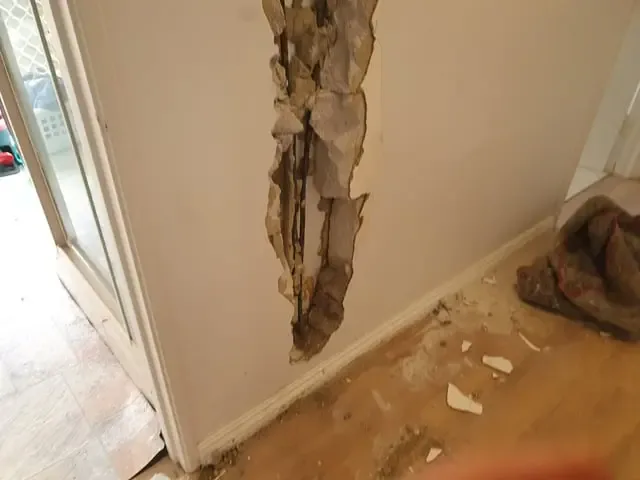
What puts local homes at risk
Water damage here follows the weather and the plumbing: heavy monsoon thunderstorms, long stretches of 100 degree summer heat, and the sewer backups that the Town traces mainly to grease and roots.
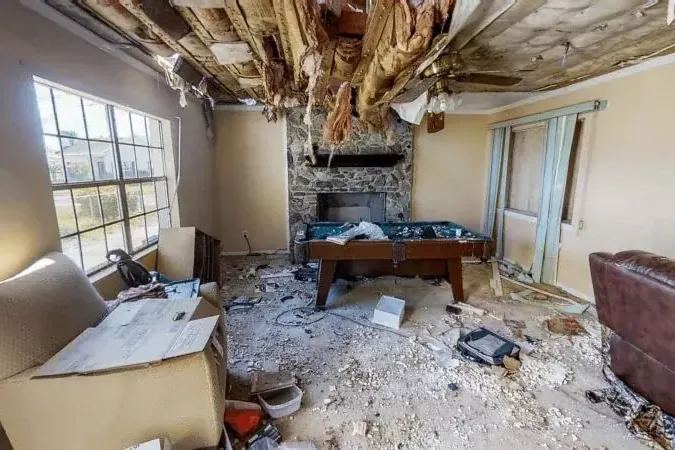
Thursday night, July 14, 2022: A monsoon storm closed the westbound lanes of Ocotillo Road at Sossaman Road, caused multiple power outages and left downed poles, damaged trees and backyard playsets around town.
Monsoon thunderstorms
The monsoon from July to mid-September brings most of the year's rain, with July averaging 1.08 inches and August 1.11, delivered by dramatic thunderstorms.
A gentler winter season
Pacific frontal systems bring a second, milder rainy season in winter, so roofs and door seals are tested twice a year instead of only in summer.
Heat that works air conditioners
With 103 days a year at 100 degrees or more, and 11 of those at 110, air conditioners run hard and a clogged condensate drain can wet a ceiling.
Roofs after dry months
Long, hot, dry months come before each monsoon, so a leak that stayed hidden all spring often shows as a ceiling stain after the first big storm.
Grease and roots in sewers
The Town names grease and roots as the two main causes of sewer backups, and owners maintain the pipe from the house to the main in the street.
Rare hard freezes
A freeze of 28 degrees or below comes only every couple of years, though the record low is 15 degrees, so an exposed pipe can still split.
Questions about water damage here
Water spreading right now?
Shut off the water if it is safe to do so, then phone the crew. The sooner extraction starts, the less the subfloor and drywall soak up.
(888) 949-8496 Phone for extraction nowHow fast does water damage spread?
Water wicks up drywall and soaks carpet pad within the first hours, and wet materials can support mold growth in 24 to 48 hours. That is why extraction comes first and drying follows right behind it.
Does insurance cover a sudden leak?
Many policies cover sudden losses such as a split pipe or a failed appliance hose, while slow seepage is often excluded. The adjuster makes that call, and the crew's photos and logs back up the file.
Do pipes really freeze and burst here?
It is uncommon. A hard freeze of 28 degrees or below happens only every couple of years on average, but the record low is 15 degrees, so exposed pipes can split. See burst pipe water damage.
What should be done after a sewage backup?
Keep everyone out of the wet area, do not run water or flush, and phone for cleanup. Porous materials soaked by sewage are removed, as explained in sewage backup cleanup.
Is monsoon water different from a pipe leak?
Yes. Storm water brings dirt and debris inside, while a supply pipe leak starts out clean, so the handling differs before extraction starts. Monsoon storm water damage covers the storm side.
Is a ceiling stain always a roof leak?
No. A roof leak, air conditioner condensate or a supply pipe above the ceiling can leave the same brown ring, so the source has to be found before the drywall is dried or replaced.
Can wet carpet be saved?
Carpet soaked by clean water and extracted promptly can often be dried in place, though the pad usually comes out. Carpet soaked by sewage or runoff is removed because it cannot be made safe.
How is the end of drying decided?
Technicians compare readings from the framing, subfloor and walls with a dry reference reading from the same home. When they match, the equipment is removed and the readings go into the job log.
What affects the price of a job?
The area that got wet, how long it sat, the flooring underneath and whether the water was clean all move the price. The cost section above gives typical bands for one room, several rooms and most of a home.
Do businesses get the same service?
Yes. Shops, offices and school buildings are scoped unit by unit and floor by floor, with a plan built around the occupants. See commercial water damage.
Water on the floor? Get it out and get the drying started
The longer water sits, the more it soaks into the structure. Phone any hour for extraction, moisture mapping and drying.
(888) 949-8496Phone the crew now