Structural Drying for Coolidge Homes
After the water is out, the structure still holds moisture in framing, subfloors and drywall. Drying equipment runs until moisture readings come back to dry reference points, so the length of the job comes from the meters, not a calendar.
(888) 949-8496Dry the structure with meters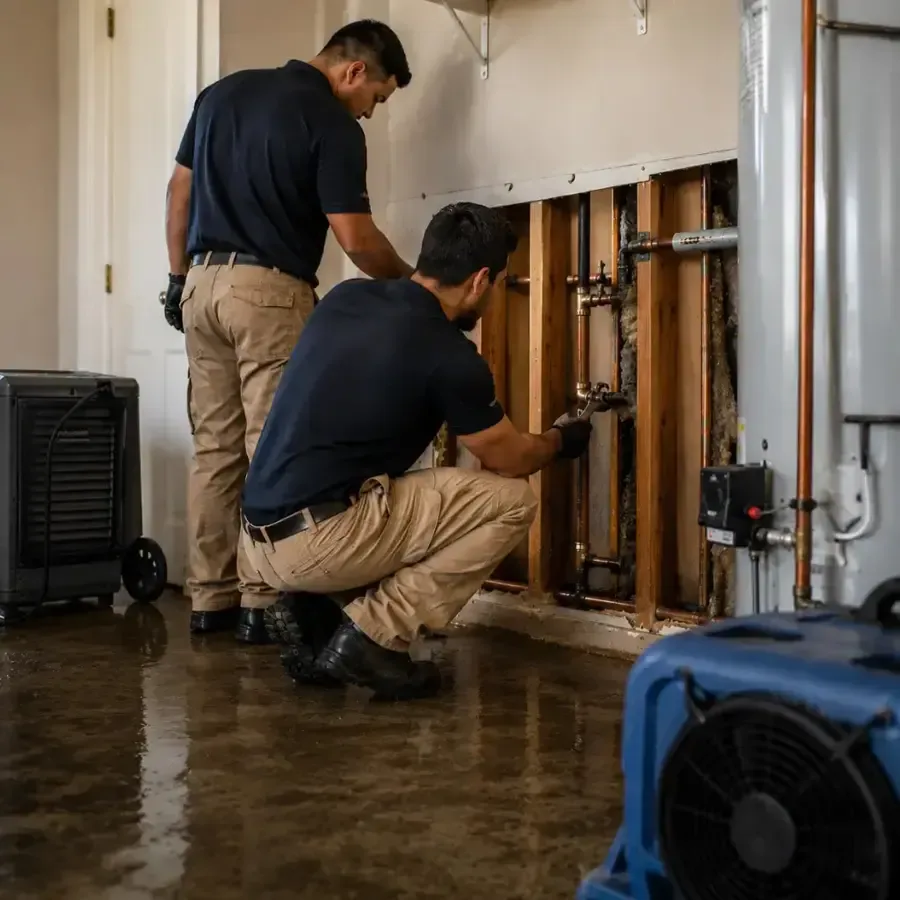
What to do right now about structural drying and dehumidification
Water out but the walls still feel damp? Let the meters decide when drying is done.
(888) 949-8496Set up the drying equipment- Extract first. Standing water has to be removed before drying equipment can do its job.
- Map the moisture. Meters and a thermal camera mark wet walls, floors and ceilings.
- Keep doors closed. A closed room lets the dehumidifiers work on the wet air inside.
- Let the readings decide. Equipment stays until every material reads dry.
What does structural drying and dehumidification cost in Coolidge, AZ?
Structural drying commonly runs $1,500 to $14,000+, depending on whether one room, several rooms or concrete and hardwood are involved. Dense materials dry slowly, so they take more equipment and more monitoring.
One room
- Air movers placed
- Dehumidifier running
- Daily readings
Several rooms
- Wall cavities dried
- Subfloor monitored
- Extended equipment
Concrete or hardwood
- Floor drying mats
- Desiccant dehumidifier
- Longer monitoring
Ranges are typical, not a quote. The category of water, the square footage, the material class and how fast drying started move the total most. Try the water damage cost calculator for a closer range.
How structural drying and dehumidification is handled in Coolidge
Map
Meters mark each wet wall and floor.
Place
Air movers and dehumidifiers go where readings are high.
Track
Daily readings show the trend.
Release
Equipment leaves when materials read dry.
Understanding structural drying and dehumidification
Hot dry weather outside does not dry a closed wall cavity or a soaked subfloor. Water trapped in framing and drywall stays there until equipment moves it out, which is why drying is measured, not guessed. Every wet room gets its own plan from the readings.
How drying is planned
- Meters read the framing, subfloor and drywall to find the wet areas.
- Thermal imaging shows moisture patterns that the eye cannot see.
- Air movers push dry air across wet surfaces and into opened cavities.
- Dehumidifiers pull the moisture out of the air so it cannot settle again.
Equipment is placed by the readings, so a room with more water gets more machines.
Reading the results
Daily visits record each reading against a dry reference point. Equipment is moved, added or taken away as the numbers change, and the job ends only when framing and subfloors read dry, not when a fixed number of days has passed. The step before drying is covered on the water extraction page.
Hard floors and concrete
Hardwood and concrete hold water longer than drywall and often need drying mats or desiccant dehumidifiers. Mats pull water from the floor surface while the dehumidifier handles the air above. Wet hardwood is checked with moisture readings and dried before any decision to refinish or replace it.
Where drying fits
Drying follows extraction in almost every job, whether the water came from slab leak water damage, a burst pipe or a monsoon storm. The earlier it starts, the less material has to come out.
Public references
For background beyond this page, see CDC, Floods and your health and Arizona Department of Insurance and Financial Institutions.
Structural drying and dehumidification across Coolidge and nearby communities
Drying work reaches historic downtown, the newer subdivisions and homes north and south of Selma Highway, plus the Business/Commerce area around Coolidge Municipal Airport and Central Arizona College, all in ZIP 85128.
The same service nearby: structural drying and dehumidification in Florence, Casa Grande, Queen Creek.
Structural Drying and Dehumidification questions, answered
Still dealing with it?
Water out but the walls still feel damp? Let the meters decide when drying is done.
(888) 949-8496 Set up the drying equipmentHow long does structural drying take?
No fixed number applies. Moisture readings of the framing, subfloor and walls decide, and equipment stays until each material reads dry.
Why not just open the windows?
Outdoor air cannot reach inside a wall cavity or a soaked subfloor. Controlled equipment moves the moisture out and the meters prove it.
Can wet hardwood be saved?
Often yes. Wet hardwood is checked with moisture readings and dried before any decision to refinish or replace it.
What if only the surface looks dry?
Drywall and framing can stay wet inside while the surface feels fine, so readings are taken inside the wall, not by touch.
Why do the machines run all day?
Air movers and dehumidifiers work continuously because moisture only leaves materials as fast as the air around them can carry it away.
How do I know drying is finished?
Final readings match the dry reference points for each material, and the log shows the trend from the first day.
Wet walls after extraction? Dry them to the readings.
Water left in framing and subfloors keeps damaging materials after the surface looks fine. The crew places equipment by the readings and checks the numbers until everything is dry.
(888) 949-8496Begin structural drying