Commercial Water Damage in Coolidge
Coolidge has downtown mixed use buildings, industrial space along the rail and State Route 87 corridors and at IPAZ, dairies and farm buildings, and facilities near the airport and Central Arizona College. Water in any of them is extracted and dried in phases that keep the business running.
(888) 949-8496Protect the business from water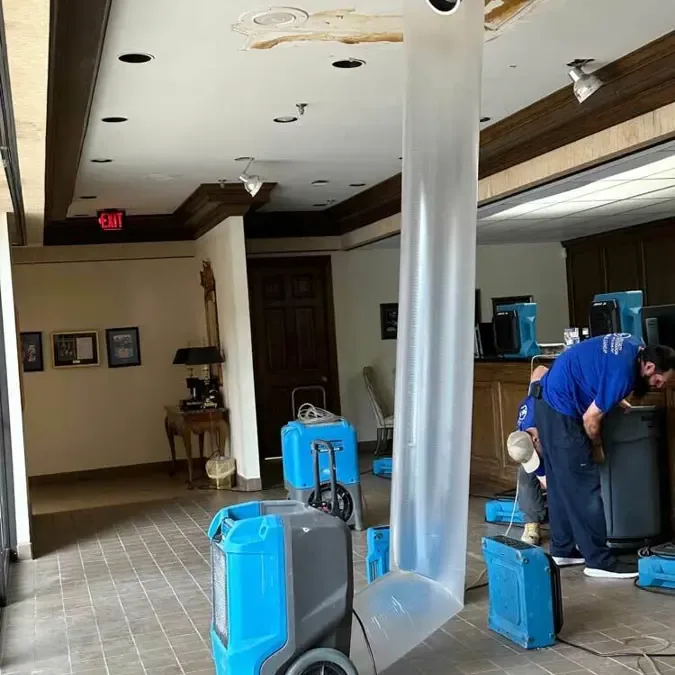
What to do right now about commercial water damage
Supply leak or drain overflow in the shop? Contain it before it reaches the neighboring suite.
(888) 949-8496Get a commercial crew moving- Shut off the water. Close the main valve or the valve serving the area.
- Protect the contents. Move inventory, files and electronics off wet floors.
- Tell the property manager. Report the loss to the owner or manager so access and tenants can be arranged.
- Call for extraction. Call now, any hour, and describe the space and the water source.
What does commercial water damage cost in Coolidge, AZ?
Commercial water damage commonly costs $3,000 to $40,000+, depending on whether one suite or shop, several suites or a large building was affected. Larger buildings also need more phasing and monitoring.
One suite or shop
- Water extracted
- Walls and floors dried
- Moisture log
Several suites
- Barriers between suites
- Phased drying
- Daily readings
Large building
- Zone by zone plan
- Extended equipment
- Full loss records
Ranges are typical, not a quote. The category of water, the square footage, the material class and how fast drying started move the total most. Try the water damage cost calculator for a closer range.
How commercial water damage is handled in Coolidge
Contain
Barriers isolate the wet zone.
Extract
Standing water is removed from floors.
Dry
Equipment runs in phases by zone.
Record
Readings and photos go to the owner.
Understanding commercial water damage
A leak in a shop or warehouse costs money twice, once for the damage and once for the downtime. Commercial jobs aim to confine the water, dry the structure in stages and give the owner and the insurer a clear record of the loss.
Different buildings, different problems
- Downtown mixed use buildings share walls, ceilings and floors between tenants.
- Industrial space along the rail corridor and at IPAZ has large floor areas to extract.
- Dairies and farm buildings need cleanup suited to open floors and heavy equipment.
- Facilities near the airport and Central Arizona College need the least possible disruption.
How a commercial job runs
The wet area is isolated with containment barriers, water is extracted and humid air is kept from spreading through the building. Drying is phased by zone so unaffected suites stay open.
Records for owners and insurers
Moisture logs, photos of each wet area and a written scope of removed materials give an owner or property manager what an adjuster needs. Daily readings show when each zone is dry, as described on the structural drying page.
Water that is not clean
If the water came from a drain or sewer, the area is closed off first and handled under sewage backup cleanup practices.
Public references
For background beyond this page, see Ready.gov, Floods and Arizona Department of Insurance and Financial Institutions.
Commercial water damage across Coolidge and nearby communities
Commercial visits cover downtown mixed use buildings, the Union Pacific Railroad and State Route 87 corridor, Inland Port Arizona, the Coolidge Industrial Park and the Business/Commerce area near the airport.
The same service nearby: commercial water damage in Florence, Casa Grande, Queen Creek.
Commercial Water Damage questions, answered
Still dealing with it?
Supply leak or drain overflow in the shop? Contain it before it reaches the neighboring suite.
(888) 949-8496 Get a commercial crew movingCan a business stay open during water cleanup?
Often yes. Containment barriers isolate the wet zone and drying is phased so unaffected suites and shops keep operating.
Who handles a leak between tenants?
The owner or property manager coordinates access, and the drying crew works through the affected spaces zone by zone.
How is a large floor area dried?
Truck mounted extractors clear the standing water, then air movers and dehumidifiers are placed by moisture readings across the space.
What records go to the insurer?
Photos of each wet area, daily moisture readings and a written scope of removed materials.
Are farm buildings and dairies handled the same way?
The steps are the same: extract, measure and dry. The cleanup is planned around open floors and heavy equipment.
What if the water came from a drain?
Sewage is treated as contaminated: the area is contained, porous materials are removed and surfaces are disinfected before drying.
Water in the building? Limit the downtime.
Downtime often costs a business more than the water itself. The crew contains the wet zone, extracts the water, dries in phases and keeps a log the owner can hand to the insurer.
(888) 949-8496Start the commercial dry out