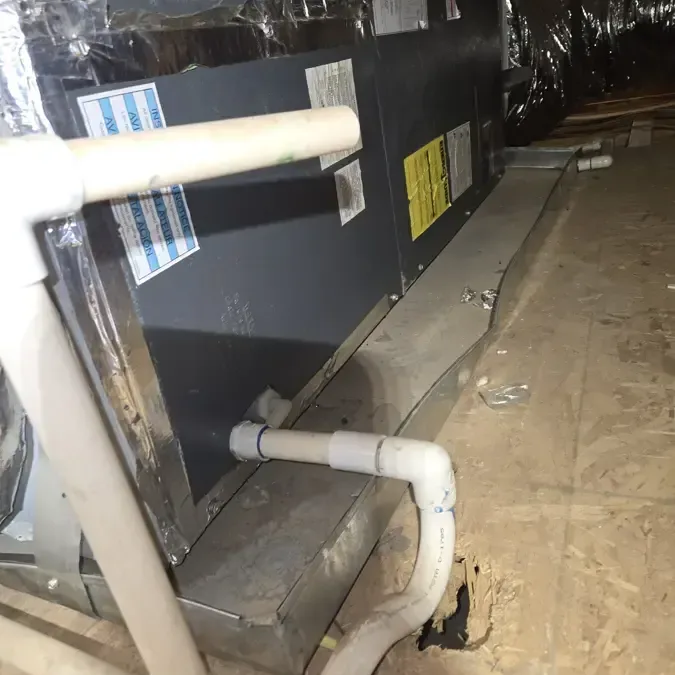
Gilbert has a hot arid climate, and mean daily highs reach 104 degrees F in June, 106 in July and 104 in August. An air conditioner running that hard makes a lot of water, and a clogged drain sends it into the ceiling.
Key takeaways
- Mean daily highs are 104 degrees F in June, 106 in July and 104 in August, so condensate flows for long stretches.
- A clogged condensate drain or an overflowing pan wets ceilings, closets and walls.
- A stain that grows when the air conditioner runs, not after rain, points to condensate.
- Rain falls in every month here, 9.21 inches a year, so a roof leak is still possible.
- The ceiling is opened where readings show water, and framing is dried before repair.
Why air conditioners leak in a Gilbert summer
A cooling coil pulls moisture out of the air and sends it down a condensate drain. In a hot arid climate with sweltering summers, that happens all day for months.
When the drain clogs, the pan under the coil fills and then overflows. Many air handlers sit in attics or closets, so the first thing the overflow reaches is a ceiling.
With a mean daily high of 106 degrees F in July, the system has little time to rest. The longer it runs, the more water the drain has to carry away.
- A clogged drain is the most common cause of an overflow.
- A cracked or rusted pan can leak even when the drain is clear.
- A disconnected or sagging drain pipe lets water spill short of the drain.
Condensate stain or roof leak? How to tell
Gilbert averages 9.21 inches of rain a year with some rain in every month, and it typically gets somewhat more rain than Phoenix. A stain on the ceiling could come from the roof as easily as from the air conditioner.
A look in the attic or closet with a flashlight often settles it. A wet pan or damp insulation around the unit points to condensate.
Signs that point to condensate
Condensate follows the cooling schedule rather than the weather.
- The stain grows on dry, hot days when the system runs most.
- It sits under or near the air handler, a return or a drain path.
- The water is clear or only lightly stained.
- The pan or drain near the unit is wet.
Signs that point to the roof
A roof leak follows the rain.
- The stain appears or darkens after a storm.
- It is brown and ringed, with soaked insulation above.
- Several rooms are affected, not only one near the unit.
What to shut off first
Turning the system off at the thermostat stops new water from forming. It also protects the unit while the pan and drain are inspected.
A call about AC condensate leak cleanup starts with extraction at the source, then a check of what the water reached.
The drain pan is a safety net, not a plan. A pan that is rusted, cracked or tilted spills water that never reaches the drain.
The unit stays off until the drain is cleared. Running a system with a clogged drain only fills the pan again and repeats the loss.
- Turn the system off at the thermostat.
- Switch off power to lights and fans below the stain.
- Set a bucket under any drip and move items out of the way.
- Photograph the stain, the unit and the pan.
How the ceiling is opened and dried
A sagging section is opened carefully so trapped water drains in a controlled way. Wet insulation above it is removed, since it holds water against the drywall.
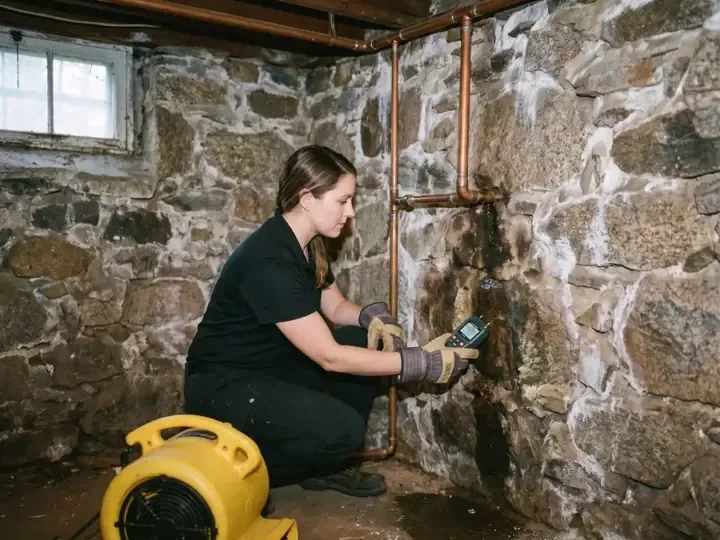
A crew that handles ceiling leak water damage then dries the joist bays with air movers and dehumidifiers. Structural drying continues until readings match a dry reference.
The Florence AC condensate page prints ranges from $900 to $2,000 for a small ceiling spot and from $2,000 to $4,000 for a ceiling and closet.
Insulation soaked by condensate is bagged and replaced, because it does not recover once it has been saturated.
A homeowner often sees only a small stain while the insulation above is soaked. Opening the ceiling is how the crew finds the true edges of the wet area.
Closets, walls and floors below the stain
Water does not stop at the ceiling. It runs down the inside of walls, into closet shelving and onto carpet or tile below.
A closet near the air handler is often hit first, and stored items soak up the water.
Items in closets are often the quiet losses. Stored linens, paper and boxes wick water and hold it long after the surface looks dry.
- Closet shelving and boxes are emptied and checked.
- Walls below the stain are tested for moisture.
- Carpet and pad are lifted if readings show water underneath.
- Tile is dried by air movers once surface water is extracted.
Keeping the drain clear and the unit serviced
The best protection is a seasonal check by an HVAC technician before the heat builds. The drain, the pan and any safety switch are tested, and a clog is cleared.
A homeowner can also look at the drain outlet outside, and note any change in how much water drips during a hot day.
A float switch, when fitted, shuts the system off when the pan fills. A technician can confirm that one is installed and working.
- Ask for a drain and pan check at every spring service.
- Keep the area around the air handler clear for access.
- Watch for stains, damp insulation or a musty smell after hot days.
What a technician and a restoration crew each do
Two different trades usually work on an overflow. Knowing who does what keeps the repair moving.
- The HVAC technician clears the drain, checks the pan and repairs the unit.
- The restoration crew extracts the water, opens the ceiling and dries the framing.
- A roofer is called only if the stain turns out to follow the rain.
Questions
Why does a Gilbert air conditioner make so much water?
The coil pulls moisture out of the air, and in a hot arid climate the system runs for long stretches. That water has to leave through the drain.
How can I tell condensate from a roof leak?
Condensate follows the cooling schedule and sits near the unit. A roof leak follows the rain and often shows brown rings.
Is the water from a condensate leak clean?
It is usually lightly stained, but it can carry dust and debris from the pan and insulation. The crew checks before deciding what to keep.
Can a ceiling dry without opening it?
Small damp spots sometimes can. A sagging or soaked section is opened so trapped water and wet insulation can be removed.
Will insurance cover an AC overflow?
That depends on the policy and the cause. Photos, readings and the service record are kept for the insurer.
Can a condensate leak cause problems besides stains?
Yes. Wet drywall can sag, trapped moisture can support mold growth and water can reach electrical fixtures. Early extraction and drying limit all three.