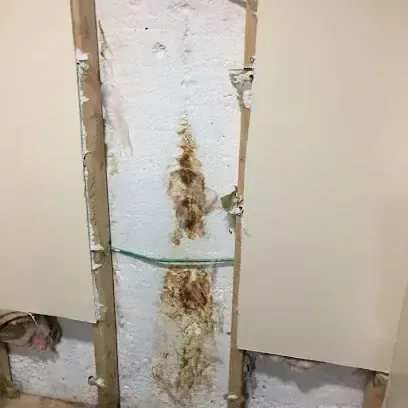
Winter afternoons here reach 65 to 75 degrees F, so pipe protection is easy to forget. Then a clear night drops below freezing and an exposed pipe or hose bib splits.
Key takeaways
- Winter lows run 35 to 45 degrees F, with several freezes each year and a record low of 8 degrees F.
- Exposed supply pipes and outdoor hose bibs are the weak points on a freeze night.
- The water supply is shut off first, then the water already on the floor is extracted.
- A split fitting can soak drywall, insulation and flooring before anyone notices.
- Drying follows moisture readings in the wall cavity, not a fixed schedule.
Why a Coolidge freeze surprises homeowners
Coolidge has a hot desert climate. Winter daytime highs usually fall between 65 and 75 degrees F, with lows between 35 and 45 degrees F.
Even so, the city sees several freezes each year, and the record low is 8 degrees F. A mild afternoon followed by a hard overnight freeze is the pattern that catches homes unprepared.
Because freezes arrive only on some nights, pipe protection is easy to skip. Bare pipes, hoses left on outdoor faucets and fixtures on outside walls take the hit.
The swing between a 65 to 75 degree afternoon and a 35 to 45 degree night leaves little warning. A forecast low near freezing is the cue to act that evening.
Where pipes and fittings split first
Two spots account for most freeze damage in a warm climate: the hose bib and the exposed supply pipe.
Outdoor hose bibs
A hose left attached traps water inside the faucet. When that water freezes it expands, and the split may sit hidden until the faucet is used again.
The fix is simple and cheap: disconnect the hose and cover the faucet before a cold night. Homeowners often leave a hose on through the cooler months because the days stay mild.
Exposed supply pipes
Supply pipes that cross unheated spaces or run along outside walls have little protection. Ice builds, the pipe cracks, and water pours out once the ice melts.
- Outdoor faucets with hoses still attached.
- Bare pipes at a garage water heater or in a utility closet on an outside wall.
- Fittings and valves in walls that face the cold side of the house.
- Irrigation connections close to the house.
The morning after: stop the water, then call
A freeze often shows itself as a stain, a drip or a wet floor. Water running after the thaw is the signal that something split.
The order matters. Stopping the supply protects the house, and a call for burst pipe water damage gets extraction started while the plumber is booked.
Opening a faucet after the main is closed drains the pipes and lowers the pressure pushing water through the split. It also helps the crew see where the water stops.
- Shut off the main water valve and open a faucet to relieve pressure.
- Switch off power to wet areas if outlets or fixtures are near the water.
- Move furniture, rugs and papers onto dry ground.
- Photograph the pipe, the wet surfaces and the damaged items.
- Keep a record of when the water was noticed and when it was shut off.
How a small split soaks a wall
Supply pipes run under pressure, so even a hairline split sends a steady stream into the wall cavity. Insulation and drywall soak it up and carry it down to the baseboard and the floor.
Most of the damage hides. A wall can feel dry on the surface while the cavity behind it stays wet, which is why moisture readings matter more than touch.
The longer a split runs, the farther the water travels. A leak found in the morning may involve one wall, while one found days later can reach rooms on both sides.
- Drywall wicks water upward and sideways from the split.
- Insulation holds water against the studs.
- Baseboards and flooring swell where the water reaches the floor.
- Cabinets are affected when the split is near a sink base.
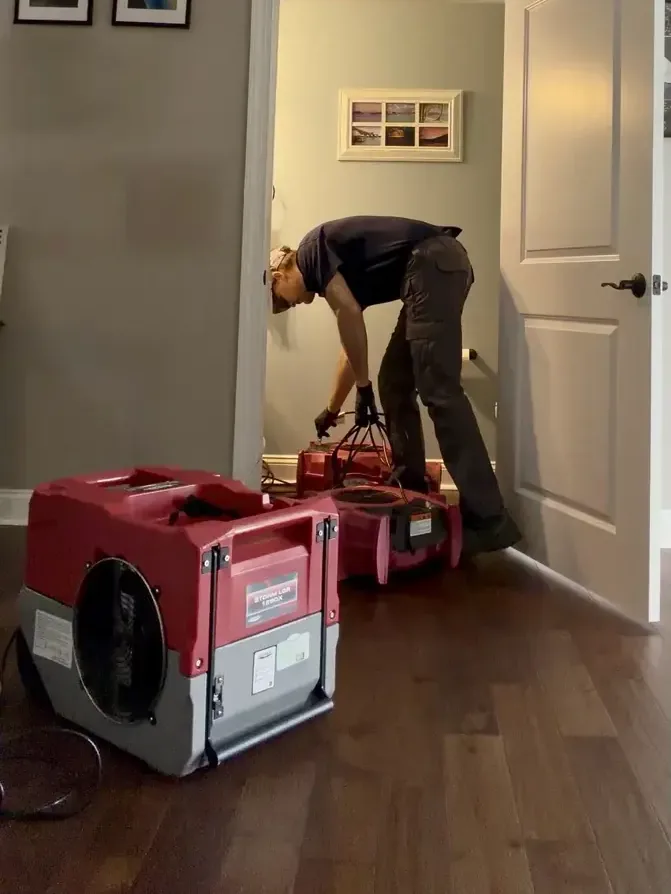
Extraction and drying after a burst pipe
Standing water goes first. Water extraction pulls it off the floor so it stops spreading into carpet, tile grout and the bottom of the walls.
Cabinet bases and flooring near the wall are checked as well. Water that ran down the cavity often hides under baseboards and cabinet kicks.
Opening the wall
The crew cuts the drywall back to where readings drop to normal and removes wet insulation. A clean, straight cut makes the repair simpler later.
Drying the cavity
Air movers and dehumidifiers run until the framing and remaining drywall match a dry reference. The Florence burst pipe page prints ranges from $1,200 to $3,000 for one wall and from $3,000 to $7,000 for a room and hallway.
Getting ready before the next freeze
A short evening task is cheaper than a wall repair. The checklist below fits a house in any part of Coolidge.
- Disconnect hoses and cover each outdoor hose bib when lows near freezing are forecast.
- Wrap or cover exposed supply pipes in garages and on outside walls.
- Learn where the main shutoff valve is and test that it turns.
- Open cabinet doors on outside walls so room air reaches the pipes.
When freeze damage is not obvious
Not every split announces itself. A pipe can crack on a freeze night, hold until the thaw, and then leak slowly inside a wall or a ceiling.
Slow leaks are easy to miss because the first symptom may be a faint stain or a sound rather than a puddle.
A moisture meter finds what the eye cannot. Readings along the wall and floor show where water has traveled, and the crew marks the edges before any cutting.
- Low water pressure at one fixture after a freeze.
- A damp spot, stain or bubbling paint on a wall that faces the cold.
- The sound of running water when every fixture is off.
- A water meter that keeps moving with everything shut.
Questions
How often does Coolidge freeze?
Several times each year, with winter lows between 35 and 45 degrees F and a record low of 8 degrees F. Most freezes are short and overnight.
Does a dripping hose bib after a freeze mean the pipe split?
It can. A split inside the faucet may only leak when the hose bib is in use, so a drip or a wet patch near an outside wall is worth tracing.
Can the wall be left alone after the pipe is repaired?
Only if readings show the cavity is dry. Wet insulation and drywall left in a closed wall keep holding moisture.
Does homeowners insurance cover a frozen pipe?
That depends on the policy and the cause. Many policies cover sudden water damage, so photos, readings and the repair invoice are kept for the insurer.
How long does the wall take to dry?
It depends on how much water reached the cavity and what the readings show. The crew checks the wall again and removes equipment only when it matches a dry reference.
Should a split hose bib be repaired or replaced?
A plumber decides on the repair. A split bib is usually replaced, and the wall behind it is checked for water.