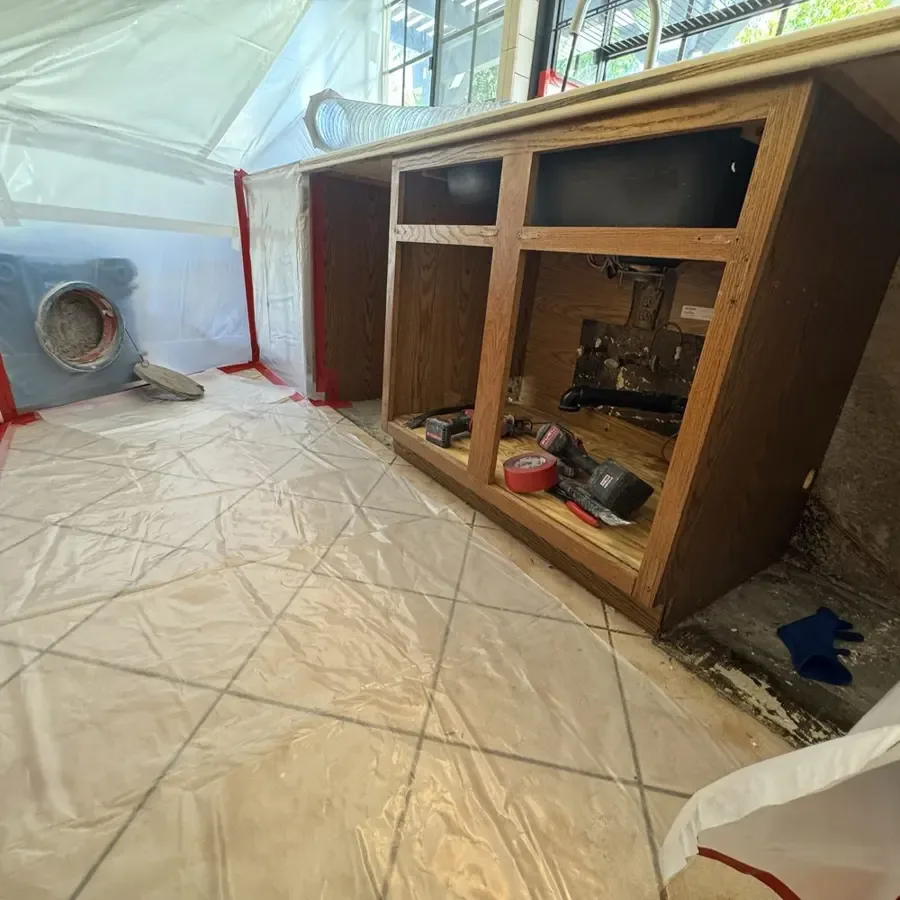
A slab leak starts under the floor, where nobody can see it. By the time tile, flooring or a wall base shows moisture, water may have been moving for a long time.
Key takeaways
- A leak under the floor stays hidden until flooring or walls show moisture.
- Warm or damp floor patches, stained grout, running-water sounds and a climbing water bill are common signs.
- Tracing the source comes before any drying, and wet tile is lifted only where needed.
- Drying a slab and the materials above it follows moisture readings.
- The same signs apply in newer master-planned communities and in the historic core.
Why a slab leak stays hidden
A supply pipe that leaks under a concrete floor discharges into the ground and the slab. The water takes the easiest path, which may be sideways under a wall before it rises.
That is why the visible damage and the actual leak are often in different rooms. Tracing the source is the first job.
Concrete soaks up a great deal of water before it shows, so the first symptom is often far from the leak.
In many cases the leak ran for weeks before any sign appeared. Catching it early shortens the dry-out and keeps more of the flooring.
Signs a homeowner can check
Several clues show up before a floor is visibly wet. Walking the house with these in mind can catch a leak early.
Inside the house
The floor and walls usually give the first signs.
- A warm spot on the floor, which can mean a leak on a hot water pipe.
- Damp, stained or discolored grout and tile edges.
- Flooring that lifts, cups or feels soft.
- Baseboards that swell or stain at the bottom.
- A musty smell with no obvious source.
At the meter and the bill
With every fixture off, a moving meter dial means water is going somewhere. A higher bill with no change in use points the same way.
A leak detection technician can narrow the search with sound and moisture tools. The goal is an exact location, so the opening in the floor stays small.
Master-planned communities and the historic core
Florence mixes communities built in the last 20 years, such as Anthem at Merrill Ranch, Magic Ranch and Crestfield Manor, with a historic core that includes Florence Gardens, Florence Heights and the Main Street district. A leak under the floor can show up in either kind of neighborhood.
What changes from house to house is the flooring on top. Tile, wood-look planks and carpet each react differently, and that decides how much is lifted.
Sun City Anthem began building in 2006 and Magma Ranch holds newer homes, so the town spans a wide range of ages. No age protects a house in either direction, which is why the signs matter more than the address.
Florence Gardens adds mature trees and a mix of manufactured and site-built homes. The leak signs are the same there, and so is the order of work.
- Tile shows grout stains and hollow sounds when tapped.
- Plank flooring cups, gaps or lifts at the edges.
- Carpet feels damp or smells musty near the leak.
Tracing comes before drying
Drying a floor while the leak is still running is wasted effort. A leak detection visit finds the pipe, and a plumber stops the source.
A crew that handles slab leak water damage lifts wet tile only where readings call for it. A smaller opening means a smaller repair afterward.
While the plumber works, the restoration crew can still extract standing water and set drying equipment around the wet area, so the slab starts drying sooner.
- Shut off the main water valve if the leak is active and the source is unknown.
- Mark any warm or damp spots with tape.
- Photograph the floor, the meter and any stains.
- Keep furniture and rugs off the wet area.
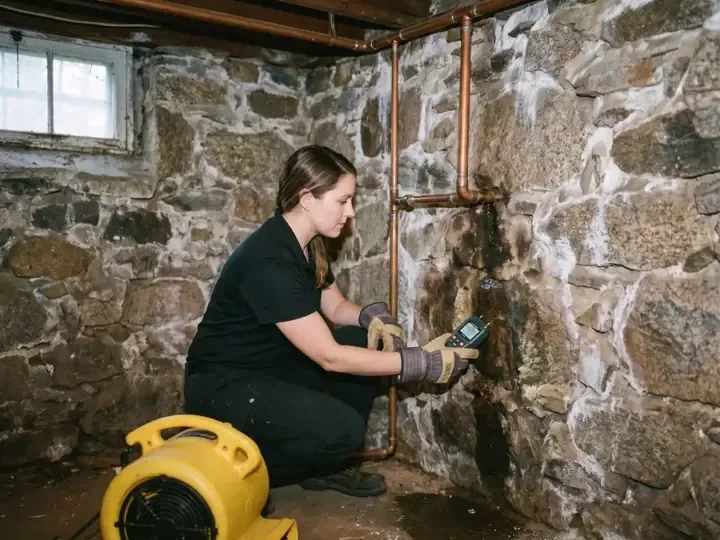
Drying a slab and the materials above it
A concrete slab holds water and gives it up slowly. Dehumidifiers and air movers pull that moisture out of the slab, the bottom of the walls and any flooring that stays.
Structural drying is measured with moisture readings, not the calendar. The drying time estimator gives a rough idea of how a project may unfold.
The Florence slab leak page prints ranges from $2,500 to $5,500 when the leak is found early, up to $10,000 to $16,000 or more for a long running leak.
Planks and carpet over a wet slab are lifted at the edges so air can reach the floor. Tile that is still firmly set is often left in place and dried through the grout joints.
The slab itself is not replaced. It is dried in place, and the flooring above it is either dried or removed, depending on readings.
What to do on the day a leak is suspected
Suspicion is enough to act. The cost of a slab leak climbs with each week it runs.
Standing water on a floor is pulled out by water extraction before the slab is dried.
A suspected leak is also a good time to test the shutoff valve. If it will not turn, a plumber can replace it before an emergency.
- Check the meter with all fixtures off.
- Look for damp baseboards, stained grout and soft flooring.
- Call a plumber and a restoration crew at the same time.
- Keep dated photos for the insurer.
Questions to ask the plumber and the restoration crew
A leak involves two jobs, and the questions differ. A short list keeps the work in order.
- Ask the plumber where the leak is and whether the source has been stopped.
- Ask the crew how much flooring has to lift and why.
- Ask what readings will show the slab is dry.
- Ask for the findings in writing for the insurer.
Questions
What is the first sign of a slab leak?
Often a warm or damp patch on the floor, stained grout, the sound of running water or a higher water bill. A moving meter with every fixture off is a strong clue.
Does the slab have to be broken to fix the leak?
Not always. The plumber decides how to reach the pipe, and the restoration crew lifts wet flooring only where readings call for it.
Can a slab leak happen in newer homes?
A leak under the floor can happen in any home. Florence mixes newer master-planned communities with a historic core, and the signs are the same.
How long does a slab take to dry?
It depends on how much water reached the slab and the materials above it. The crew keeps taking readings and removes equipment once they match a dry reference.
Is a slab leak covered by homeowners insurance?
Coverage depends on the policy and the cause. Photos, readings and the plumber's report are kept for the insurer.
Why does the restoration crew need the plumber's finding?
The finding shows where the leak was and whether it is stopped. Drying starts only once the source is stopped, so the water does not return.