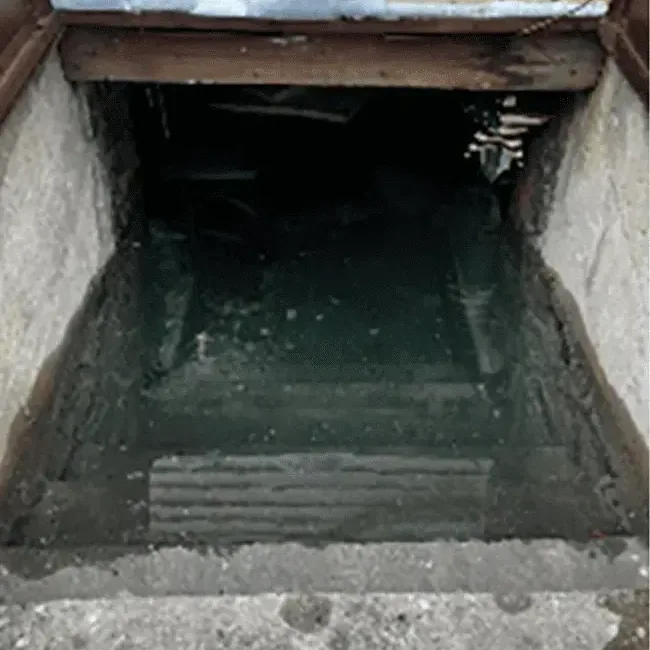
Florence began at a crossing on the Gila River, and the river has shaped the town ever since. When a monsoon downpour sends runoff into a house or garage, the cleanup follows a set order that starts with safety and ends with dry framing.
Key takeaways
- In the early 1900s the Gila River overflowed after a storm and wiped out most of Adamsville, a farming town.
- Half of the summer rain here falls from July to September, and August is the wettest month.
- Runoff that enters a house is handled as Category 3 water, so porous materials are removed rather than dried in place.
- Power comes off and photos are taken before anyone wades into standing water or moves belongings.
- Extraction comes first, then removal of wet materials, then drying guided by moisture readings.
What happened to Adamsville
Florence was founded in 1866 on the south bank of the Gila River, at a crossing where the river could be forded. In the 1880s a canal diverted Gila River water for irrigation, which tied the area's farming to the river.
Then, in the early 1900s, the river overflowed after a storm and wiped out most of Adamsville, the farming town west of Florence. Residents moved to Florence, and a historical marker now stands at the Highway 79 and 287 junction.
That history is not a forecast for any one house. It is a reminder that water in this part of Arizona can arrive fast and do real damage.
- 1866: the town is founded on the south bank of the Gila River at a fordable crossing.
- 1880s: a canal is built to divert river water for irrigation.
- Early 1900s: a storm overflow of the river wipes out most of Adamsville.
- Today: a historical marker stands at the Highway 79 and 287 junction.
How the monsoon sets up flash flood risk
Florence has a hot desert climate in the lower Sonoran Desert. Half of the summer rain falls from July to September, and August is the wettest month.
Those storms bring heavy downpours, blowing dust and a risk of flash flooding. December is the second wettest month, so winter rain also reaches the area.
A flash flood differs from a roof leak or a burst pipe in one way that matters for cleanup: the water comes across the ground and carries whatever it crossed.
Where runoff gets in
Runoff follows the lowest path to a house. It usually enters at a threshold rather than through a wall.
- Garage door thresholds and the slab just inside them.
- Patio doors, sliders and exterior doors at ground level.
- Yards and walkways that slope toward the house.
- Below-grade openings such as stairwells.
Checking exposure before the season
A homeowner can walk the lot before July and note where water would collect. The monsoon flood risk check is a quick way to organize that walk.
Why runoff is handled as Category 3 water
Floodwater crosses driveways, yards, roadsides and drains before it reaches a door. It carries soil, debris and whatever else was on the ground, so restoration crews treat it as Category 3, the most contaminated class of water.
That classification changes the work. Materials that soak up the water are removed instead of dried, and hard surfaces are cleaned and disinfected.
Contamination is not always visible. Water that looks fairly clear can still carry bacteria from the ground, so the label depends on where the water came from, not on its color.
- Carpet and pad that sat in runoff are removed.
- Wet insulation and the lower stretch of drywall are cut out.
- Tile, concrete and sealed hard surfaces are cleaned, disinfected and dried.
- Baseboards are pulled so the bottom of each wall can be checked.
First steps when runoff stands in a house or garage
If the water is still rising, leaving the area comes first. Belongings can be replaced, but a person caught in a flooded room cannot.
Safety comes before cleanup. Standing water and electricity do not mix, so the breaker panel is the first stop, but only if it can be reached from dry ground.
Photographs come next, taken before anything is moved. A crew that handles flash flood cleanup works from those photos and from what the readings show.
- Turn off power to the affected area at the panel only if no water reaches the panel or the floor around it.
- Keep children, pets and anyone with a health condition out of the water.
- Photograph the water level, the entry point and damaged belongings.
- Lift valuables, papers and electronics onto dry surfaces above the water.
- Never use a household vacuum on standing water.
- Ask for extraction while water is still standing, since the longer it sits the deeper it soaks.
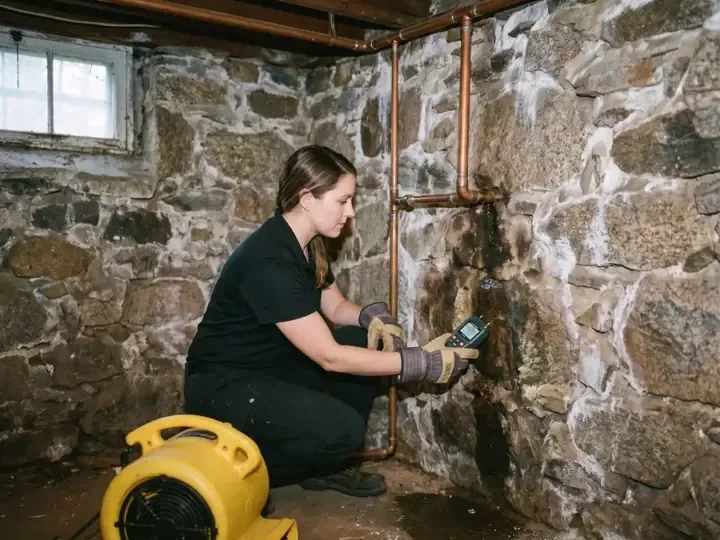
What extraction removes first and what dries afterward
Truck-mounted and portable units pull standing water off tile, carpet and concrete before anything else happens. Water extraction goes first because every wet surface keeps feeding moisture into the materials around it.
What comes out
Once the standing water is gone, the crew removes what cannot be cleaned. Silt and debris are scooped out of corners, door tracks and under cabinets.
What dries in place
Air movers and dehumidifiers dry the framing, the slab and any drywall that stays. Moisture readings decide when equipment comes out, not the calendar.
The flash flood service page prints ranges from $4,000 to $8,000 for a garage and one room, up to $12,000 to $30,000 or more when most of the home is affected.
After the cleanup: records and the next storm
Moisture readings, photos and a list of removed materials go to the insurer. Damp materials left in place can start growing mold, which is why drying continues until readings match a dry reference.
The Adamsville story ends with people moving to higher ground. Most homeowners cannot move, but they can plan: locate the panel and the main shutoff, keep drains and low spots clear, and know who to call.
Rain pushed under a door rather than rising off the ground is a different job, covered by monsoon storm water damage.
Questions
Does the Adamsville flood mean Florence homes flood often?
No. The record shows one early 1900s overflow of the Gila River after a storm. Today's concern is the monsoon, when heavy downpours can bring flash flooding, and exposure varies by lot and street.
Is monsoon runoff really that contaminated?
Runoff crosses ground, driveways and drains before it reaches a house, so it is treated as Category 3. That is why carpet and pad are removed instead of dried.
Should the garage be cleaned before the rest of the house?
Extraction follows the water. The garage slab is often the lowest surface, but the crew checks adjoining walls and rooms in the same visit.
Can flooring be saved after floodwater?
Tile and sealed concrete can often be cleaned and dried. Carpet, pad and other soft materials that sat in runoff are removed.
When is it safe to turn the power back on?
Power stays off to any wet circuit until the area is dry and an electrician or the crew confirms it is safe. A wet panel or outlet is never reset by hand.
How is a flash flood different from rain coming under a door?
Runoff rises off the ground and carries debris, so it is treated as Category 3. Rain driven under a door has not crossed the ground the same way, so it is often a lower category of contamination.