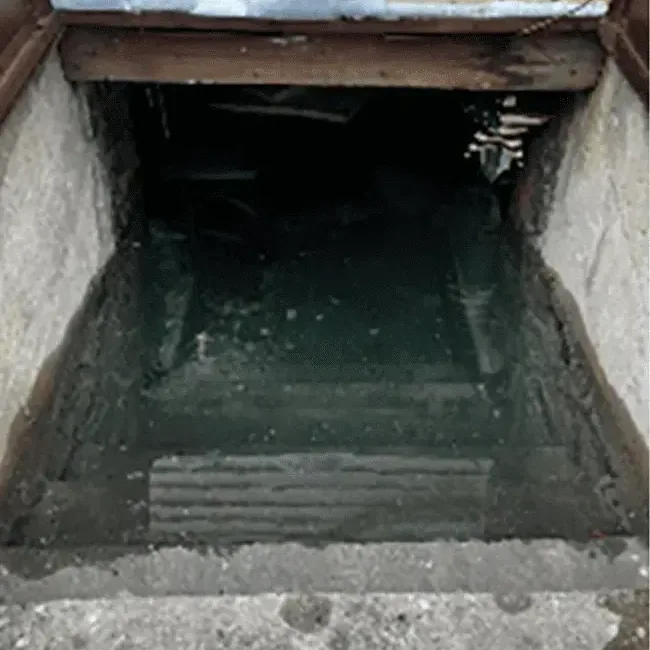
Overnight and early morning rain on September 23, 2019 flooded Apache Junction and caused more than 20 road closures. For homes that took water, the real work started after the rain stopped.
Key takeaways
- City gauges registered three inches of rain in six hours that Monday morning, and several motorists got stuck in their cars.
- Washes carry water from the Superstition Mountains down into town and can carry debris, so floodwater often brings silt inside.
- Floodwater is handled as Category 3, so porous materials are removed and hard surfaces are cleaned and disinfected.
- Extraction comes first, then removal of silt and wet materials, then structural drying.
- Fast-moving floodwater is still a hazard, and in October 2025 floodwaters trapped a car in town.
What happened on September 23, 2019
Rain fell overnight and into the early morning, and it flooded Apache Junction. The city recorded more than 20 road closures.
That Monday morning the city's gauges registered three inches of rain in six hours, and several motorists called for rescues after getting stuck in their cars. Flash-flood warnings went out that day for parts of Maricopa, Pinal and Gila counties.
The date matters for records. Adjusters ask for the event date, and September 23, 2019 is documented by the city's gauges and its road closures.
- Date: September 23, 2019, a Monday.
- Rain: three inches in six hours, per the city's gauges.
- Roads: more than 20 closures.
- Warnings: flash-flood warnings for parts of three counties.
Washes, debris and where runoff goes
A city spokesman said in 2019 that much of the city has washes that flow from the Superstition Mountains down into town. He said they can carry debris, and he told people to stay out of them.
The city says stormwater runoff moves through street gutters, culverts and open channels to community retention basins, green spaces, parks and washes. When rain outpaces that system, water takes the next easiest path, which can be a garage door or a patio slider.
Debris and silt can reach a house by way of a wash, a street or a driveway, so the cleanup plan does not depend on which one carried the water.
Why silt comes with the water
Water that comes down a wash picks up sand, gravel, leaves and trash. When it reaches a house it drops that load on the floor.
- Silt settles into door tracks, carpet fibers and cabinet kick plates.
- Debris blocks floor drains and clogs extraction equipment if not scooped first.
- Mud dries to a crust that hides moisture underneath.
What floodwater leaves inside a home
Floodwater is treated as Category 3 because of what it crosses before it reaches a house. That decides which materials stay and which go.
The Monday morning flooding tested every threshold in town: garage doors, patio sliders and front entries. Wherever water got in, it carried the same load.
Garage and entry
The garage slab and entry are usually the first surfaces to take water. Stored boxes, cabinets and anything on the floor are the first losses.
Stored cardboard, fabric and wood absorb floodwater and are rarely worth saving. Photographs taken before disposal support the claim.
Living areas
Where water reaches carpet and pad, both are removed. Drywall is cut above the waterline when readings show wicking.
- Carpet and pad that soaked in floodwater are removed.
- Baseboards come off so the wall bottoms can be checked.
- Wet insulation in the lower wall is cut out.
- Tile and sealed concrete are cleaned, disinfected and dried.
The cleanup order: extraction first
A crew that handles flash flood cleanup follows a fixed order so that nothing already clean is re-wet. The standing water has to go before anything else can be assessed.
Water extraction uses truck-mounted and portable units, and the first pass is followed by scooping silt and debris from corners and tracks.
Speed matters because silt that dries into a crust hides moisture underneath and is harder to remove.
- Stop the source and make the area safe, including power.
- Extract standing water from floors and low spots.
- Scoop silt and debris, then remove soaked carpet, pad and insulation.
- Clean and disinfect hard surfaces.
- Take moisture readings and set drying equipment.
Drying after the silt is out
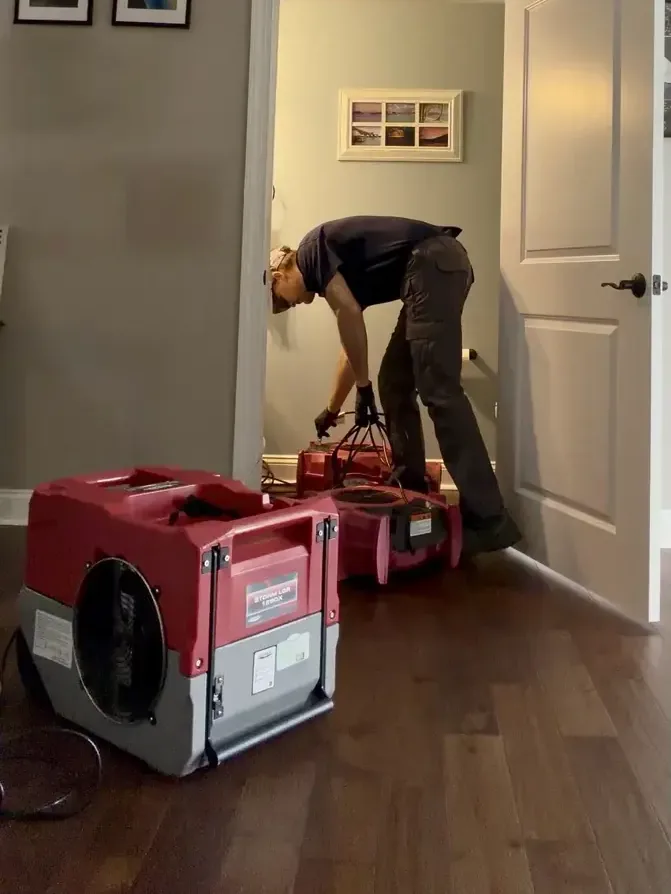
Once the mess is cleared, the structure still holds moisture. Structural drying uses air movers and dehumidifiers to pull it out of framing, drywall edges and the slab.
Readings direct the work. Equipment comes out when the numbers match a dry reference, not when a surface looks dry.
The Florence flash flood page prints ranges from $4,000 to $8,000 for a garage and one room, and the final cost depends on how far water spread.
Drywall that wicked water above the cut is checked again after equipment has run, since moisture can migrate upward during drying.
A newer reminder from October 2025
In October 2025, fast-moving floodwaters in Apache Junction trapped a car. It is a reminder that moving water does not need to be deep to be dangerous.
Arizona's Stupid Motorist law, A.R.S. 28-910, penalizes drivers who go around barricades to cross flooded roads. The same caution applies to washes, which are never a shortcut after rain.
After any storm, a quick walk around the lot for new channels or debris piles shows where the next storm will push water. Photographs of those spots help later.
- Stay out of washes and away from moving water.
- Turn around at a flooded road instead of testing the depth.
- Wait for water to drop before checking a garage or yard.
Stormwater projects and what they mean for a homeowner
The Arizona Department of Environmental Quality oversees stormwater permits, and the city keeps a Stormwater Management Plan. The city also announced construction of a new stormwater detention basin at Central Arizona College, starting August 3, 2026.
A new basin can ease pressure on drainage, but it does not make any one house flood proof. Owners still need a plan for their own lot.
- Know how water crosses the lot and where it would collect.
- Keep garage thresholds and door seals in good shape.
- Keep valuables off the garage floor during the monsoon.
Questions
How much rain fell on September 23, 2019?
The city's gauges registered three inches of rain in six hours that Monday morning, after rain overnight.
Why does floodwater leave so much silt?
Water running down a wash picks up sand, debris and mud. When it enters a house it drops that load on the floor and in door tracks.
Can carpet be saved after floodwater?
Usually not. Floodwater is treated as Category 3, so carpet and pad that soaked in it are removed.
Who handles drainage in town?
The city says runoff moves through street gutters, culverts and open channels to retention basins, parks and washes, and it keeps a Stormwater Management Plan.
When can the drying equipment come out?
When moisture readings in the framing, drywall and slab match a dry reference, which the crew confirms with the meter.
Is the Central Arizona College basin finished?
The city announced that construction would start on August 3, 2026. Homeowners can check with the city for the current status.